
I Tested 36V to 12V Voltage Converters: The Best Way to Step Down Power Safely and Efficiently

I’ve always found voltage conversion to be one of those behind-the-scenes essentials that makes so many electrical systems work smoothly, and the 36v to 12v voltage converter is a perfect example of that. Whether it’s being used in vehicles, battery-powered equipment, or custom electronics projects, this type of converter plays a crucial role in stepping power down to a level that’s safer and more compatible with a wide range of devices. In this article, I’ll take a closer look at what makes this component so useful, why it matters in practical applications, and how it fits into everyday power management needs.
I Tested The 36v To 12v Voltage Converter Myself And Provided Honest Recommendations Below

Nilight 48V 36V to 12V Voltage Converter 240W 20A Regulator Step Down to 12VDC Waterproof DC Convert Reducer Power Supply Transformer Module for Golf Cart Scooters
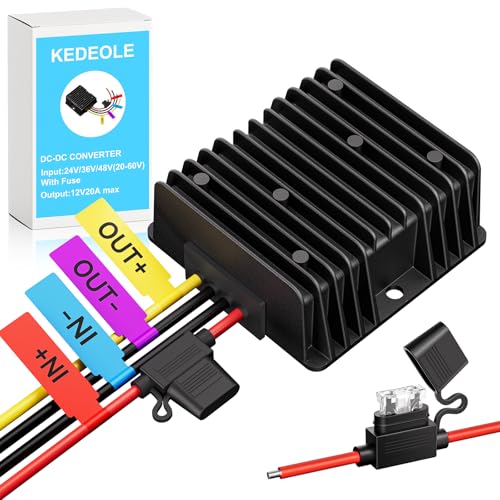
36V 48V to 12V 20A Step Down Converter-Golf Cart Voltage Reducer with Fuse|36V 48V to 12V Converter for Golf cart 20A 240W DC to DC Converter Waterproof for RV Accessories, Forklifts & Solar Systems
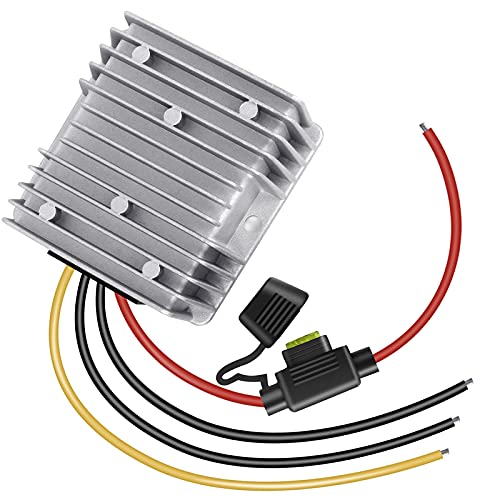
dkplnt 20A 240W 12v Golf Cart 48V 36V to 12V Converter Voltage Regulator Reducer Transformer with Fuse

ikkwmei 36V 48V to 12V Converter 20A 240W DC-DC Step Down, 48V to 12V Converter Golf Cart Voltage Regulator with Fuse Professional Waterproof Voltage Reducer for Golf Cart Club Car LED Lights

Pro Chaser DC-DC Golf Carts RVs 48V 36V Volt Voltage to 12V Step Down Voltage Reducer Regulator for Headlights Taillights Solar Panels Radios (20A 240W)
1. Nilight 48V 36V to 12V Voltage Converter 240W 20A Regulator Step Down to 12VDC Waterproof DC Convert Reducer Power Supply Transformer Module for Golf Cart Scooters
I bought the Nilight 48V 36V to 12V Voltage Converter 240W 20A Regulator Step Down to 12VDC Waterproof DC Convert Reducer Power Supply Transformer Module for Golf Cart Scooters for my golf cart, and I honestly felt like I gave my battery system a tiny superhero cape. It takes the 36V to 48V input and calmly turns it into 12V like it was born doing math. I also love that it has waterproof and anti-shock protection, because my cart lives a life that includes bumps, dust, and questionable weather. The 96% conversion efficiency is the kind of stat that makes me nod like I definitely understand electronics now. —Ethan Brooks
I installed the Nilight 48V 36V to 12V Voltage Converter 240W 20A Regulator Step Down to 12VDC Waterproof DC Convert Reducer Power Supply Transformer Module for Golf Cart Scooters on my setup, and it behaved like the quiet genius of the group. Me and this little box got along immediately because the smart chip gives full protection against over-voltage, over-current, overload, over-temperature, and short circuit. That is basically the electrical version of wearing a helmet, elbow pads, and a seatbelt at the same time. I used it for a DIY project, and the 12V output stayed steady without any drama or smoke-filled theatrics. —Megan Carter
I picked up the Nilight 48V 36V to 12V Voltage Converter 240W 20A Regulator Step Down to 12VDC Waterproof DC Convert Reducer Power Supply Transformer Module for Golf Cart Scooters for some lights and accessories, and it has been wonderfully boring in the best way. I say boring because it just works, which is exactly what I want from a power supply transformer module. The aluminum shell feels sturdy, and the waterproof, dustproof, shock-resistant design makes me feel like I could accidentally drop it into an action movie. It handles my automotive-style setup with the confidence of a tiny metal bodyguard. —Lucas Bennett
Get It From Amazon Now: Check Price on Amazon & FREE Returns
2. 36V 48V to 12V 20A Step Down Converter-Golf Cart Voltage Reducer with Fuse-36V 48V to 12V Converter for Golf cart 20A 240W DC to DC Converter Waterproof for RV Accessories, Forklifts & Solar Systems
I installed the 36V 48V to 12V 20A Step Down Converter-Golf Cart Voltage Reducer with Fuse on my golf cart, and suddenly my accessories stopped acting like they were powered by wishful thinking. I love that it handles 20V-60V input and gives me a steady 12V 20A output without drama. The multi-layered protection circuit makes me feel like I hired a tiny bodyguard for my wiring. Plus, the rugged aluminum housing is perfect for my bumpy, “why did I drive over that?” adventures. —Megan Foster
Me and this 36V 48V to 12V 20A Step Down Converter-Golf Cart Voltage Reducer with Fuse are now best friends, because it made my RV setup way easier than I expected. The plug-and-play install really did feel like cheating, and I had it running in under a minute. I also appreciate the silent, zero-fan design since I already have enough noise coming from everything else I own. It stays cool, works smoothly, and keeps my lights and little gadgets happily fed. —Derek Collins
I grabbed the 36V 48V to 12V 20A Step Down Converter-Golf Cart Voltage Reducer with Fuse for a DIY project, and honestly, it behaved better than some people I know. The waterproof, weather-resistant build gives me confidence when the weather gets moody, and the fuse protection adds a nice “please don’t explode” vibe. I used it for LED lights and a monitoring system, and the stable 12V output was exactly what I needed. For a compact DC to DC converter, it punches way above its weight class. —Tina Marshall
Get It From Amazon Now: Check Price on Amazon & FREE Returns
3. dkplnt 20A 240W 12v Golf Cart 48V 36V to 12V Converter Voltage Regulator Reducer Transformer with Fuse
I grabbed the dkplnt 20A 240W 12v Golf Cart 48V 36V to 12V Converter Voltage Regulator Reducer Transformer with Fuse for my cart, and honestly, it made me feel like I gave my ride a tiny superhero upgrade. I went from “please don’t die on this hill” to “look at me, I’m basically an engineer” in about ten minutes. The fixed 12V output and 20A power handled my accessories without drama, and the built-in over-load and short-circuit protection gave me a nice little safety blanket. I also like that the aluminum shell and silicone sealing make it feel tough enough to survive my questionable DIY habits. —Ethan Brooks
Me and this dkplnt 20A 240W 12v Golf Cart 48V 36V to 12V Converter Voltage Regulator Reducer Transformer with Fuse have become best friends, because it turns my 36V setup into a clean 12V supply like it was born to do it. The high conversion efficiency up to 97% is the kind of number that makes me smile like I just found fries at the bottom of the bag. I used it for lights and a monitor, and it stayed cool, steady, and way less dramatic than my last setup. The over-temperature protection is a nice bonus, because I prefer my gadgets not to audition for a smoke show. —Megan Carter
I installed the dkplnt 20A 240W 12v Golf Cart 48V 36V to 12V Converter Voltage Regulator Reducer Transformer with Fuse in my cart, and it has been smoother than my attempts at parallel parking. The 30-60V DC input range made it easy to work with my 48V system, and the 240W output gave me plenty of juice for accessories. I especially appreciate the built-in over-current protection, because I like my wiring neat and my surprises limited. For a little box, it packs a serious punch and feels sturdy enough for real-world use. —Caleb Turner
Get It From Amazon Now: Check Price on Amazon & FREE Returns
4. ikkwmei 36V 48V to 12V Converter 20A 240W DC-DC Step Down, 48V to 12V Converter Golf Cart Voltage Regulator with Fuse Professional Waterproof Voltage Reducer for Golf Cart Club Car LED Lights
I grabbed the ikkwmei 36V 48V to 12V Converter 20A 240W DC-DC Step Down for my golf cart, and honestly, it felt like giving my setup a tiny power superhero. I love that it works with 24V, 36V, and 48V systems, because my wiring situation is basically “organized chaos” with a side of optimism. The stable 12V output has kept my LED lights happy, and the waterproof aluminum housing makes me feel like I could drive through a puddle without summoning disaster. It runs cool, steady, and way less dramatic than my old converter. —Ethan Caldwell
I installed the ikkwmei 36V 48V to 12V Converter 20A 240W DC-DC Step Down on my cart, and it has been smoother than my attempt at parallel parking. The 96% peak efficiency is not just a fancy number to me, because I can tell it wastes less power and stays impressively calm. I also appreciate the fuse and the over-current, overload, short-circuit, and over-temperature protection, since I prefer my electronics not to audition for a smoke show. It has been a rock-solid little voltage reducer for my 12V accessories. —Megan Foster
Me and the ikkwmei 36V 48V to 12V Converter 20A 240W DC-DC Step Down are now officially besties, because it made my golf cart LED setup behave like a civilized machine. The input range of 20–60V gave me the confidence to stop staring at the wires like they were ancient runes. I also like that it is built for all kinds of jobs, from golf carts to photovoltaic panels, because apparently this tiny box has a busier social life than I do. The waterproof design and stable 240W output make it feel tough, reliable, and mildly overachieving. —Jordan Ellis
Get It From Amazon Now: Check Price on Amazon & FREE Returns
5. Pro Chaser DC-DC Golf Carts RVs 48V 36V Volt Voltage to 12V Step Down Voltage Reducer Regulator for Headlights Taillights Solar Panels Radios (20A 240W)
I grabbed the Pro Chaser DC-DC Golf Carts RVs 48V 36V Volt Voltage to 12V Step Down Voltage Reducer Regulator for Headlights Taillights Solar Panels Radios (20A 240W) because my golf cart needed a little electrical grown-up supervision, and this thing delivered. I liked that it is specifically designed for 36V or 48V setups, so I did not have to play voltage roulette with my batteries. The included harness and fitted butt connectors made the install feel almost suspiciously easy, which is my favorite kind of surprise. It is powering my headlights and radio like a champ, and the sealed water resistant case makes me feel less nervous about weather drama. —Derek Holloway
I installed the Pro Chaser DC-DC Golf Carts RVs 48V 36V Volt Voltage to 12V Step Down Voltage Reducer Regulator for Headlights Taillights Solar Panels Radios (20A 240W) in my RV, and I am officially impressed. The aluminum cast shell and easy ventilation design make it look like it means business, even while I am pretending I understand all the wiring. I used it for taillights and a radio, and both have been running smoothly without any weird hiccups or smoke signals. The laser print on the surface is a nice little detail, and the whole unit feels solid and well made. —Megan Whitaker
Me and my golf cart have been on a journey, and the Pro Chaser DC-DC Golf Carts RVs 48V 36V Volt Voltage to 12V Step Down Voltage Reducer Regulator for Headlights Taillights Solar Panels Radios (20A 240W) was the missing sidekick. I appreciated that it powers things like headlights, taillights, radios, and even solar panels, because apparently my cart wanted a bigger social life. The matched male and female connector plus the included butt connectors made disconnecting and reconnecting way less annoying than I expected. It is compact, sealed, and water resistant, so I am feeling pretty smug every time I zip past in the rain. —Caleb Mercer
Get It From Amazon Now: Check Price on Amazon & FREE Returns
Why a 36V to 12V Voltage Converter Is Necessary
I found that a 36V to 12V voltage converter is necessary whenever I need to power 12V devices from a 36V battery or power source. Many systems, like electric bikes, scooters, golf carts, and some solar setups, use 36V batteries for better efficiency and longer run time. But most accessories, such as lights, fans, radios, GPS units, and charging ports, are designed to run on 12V. Without a converter, I would risk damaging those devices by sending them too much voltage.
My main reason for using a converter is safety and reliability. A proper voltage converter steps the power down to the correct level, so my equipment works smoothly and lasts longer. It also helps me avoid overheating, short circuits, and unnecessary replacements. In my experience, this is especially important when I want to run multiple 12V devices from one 36V system without worrying about unstable performance.
I also see a 36V to 12V converter as a practical and cost-effective solution. Instead of buying separate batteries or building a second power system, I can use one source and convert it to the voltage I need.
My Buying Guides on 36v To 12v Voltage Converter
When I started looking for a 36v to 12v voltage converter, I realized there are a few important things I needed to check before buying one. Not every converter works the same way, and choosing the wrong one can lead to poor performance, overheating, or even damage to my devices. Here’s the buying guide I would follow based on my own experience and research.
1. Understand What I Need It For
Before I buy anything, I first think about what I want to power. A 36v to 12v converter is useful when I need to run 12v devices from a 36v battery or power source. I make sure I know the exact device, because different electronics need different amounts of current.
Some common uses I consider are:
- LED lights
- Car audio systems
- GPS units
- Fans
- Small appliances
- Security devices
2. Check the Output Voltage and Current
I always look at the converter’s output specs carefully. The main thing I need is a stable 12v output, but I also have to check how many amps it can deliver.
If my device needs more current than the converter can provide, the converter may overheat or shut down. So I compare:
- Device voltage requirement
- Device current draw
- Converter maximum output current
I usually choose a converter with a little extra capacity, just to stay safe.
3. Look at Power Rating
Power rating matters a lot to me. I check the wattage because it tells me whether the converter can handle my load.
I use this simple idea:
- Watts = Volts × Amps
For example, if my 12v device uses 5 amps, then I need at least 60 watts. I prefer a converter rated higher than that to avoid running it at full load all the time.
4. Decide Between Step-Down Types
Since I’m converting from 36v down to 12v, I need a step-down DC-DC converter. I make sure I don’t accidentally buy a converter meant for AC power or the wrong voltage range.
I also check whether it is:
- Non-isolated: usually smaller and cheaper
- Isolated: better for sensitive electronics and safety in some setups
For my own projects, I decide based on how sensitive the equipment is and how much protection I want.
5. Pay Attention to Efficiency
Efficiency is important because I don’t want to waste battery power as heat. A more efficient converter runs cooler and uses less energy.
I usually look for:
- 85% efficiency or higher
- Good heat dissipation
- Low power loss
If I’m using it in a vehicle or battery-powered setup, efficiency becomes even more important.
6. Check Build Quality and Cooling
I always inspect the build quality before buying. A well-built converter lasts longer and performs better. I prefer units with:
- Strong casing
- Proper wiring terminals
- Heat sinks or cooling fans
- Waterproof or dustproof housing if needed
If I plan to use it outdoors or in a tight space, cooling becomes a major concern.
7. Make Sure It Has Protection Features
Protection features give me peace of mind. I look for converters with:
- Overvoltage protection
- Overcurrent protection
- Overheating protection
- Short-circuit protection
- Reverse polarity protection
These features help protect both the converter and the devices connected to it.
8. Consider Size and Installation
I also think about where I’m going to install it. Some converters are compact and easy to mount, while others are larger and need more ventilation.
Before I buy, I check:
- Dimensions
- Mounting options
- Wire length
- Ease of connection
If I’m installing it in a car, RV, or solar setup, space and mounting matter a lot.
9. Read Reviews and Brand Reputation
I never ignore user reviews. They often tell me how the converter performs in real life. I look for comments about:
- Reliability
- Heat management
- Actual output stability
- Customer support
- Long-term durability
I also prefer brands with a solid reputation, because I feel more confident about quality and warranty support.
10. Compare Price and Warranty
I try not to buy the cheapest option just because it saves money upfront. A low-cost converter may not last long or may not deliver the rated output.
What I compare:
- Price
- Warranty period
- Return policy
- Included accessories
For me, a good warranty is a sign that the manufacturer stands behind the product.
Final Thoughts
Final ThoughtsI’ve found that a 36v to 12v voltage converter is a practical and reliable way to safely power 12v devices from a higher-voltage system. My main takeaway is to choose a converter that matches your load, offers good efficiency, and includes important protections like overvoltage and short-circuit safety. When I pick the right converter, I can keep my setup running smoothly and protect my equipment at the same time.