
I Tested SSD PCI Express 4.0 and Here’s Why It’s the Fastest Upgrade I’ve Made

When I think about how much faster modern computing has become, one upgrade that stands out is the SSD PCI Express 4.0. It represents a major step forward in storage performance, offering the kind of speed and responsiveness that can make everyday tasks feel smoother and more immediate. Whether I’m talking about boot times, loading large files, or keeping up with demanding applications, this technology has become an exciting part of the conversation around high-performance systems. In this article, I’ll explore why SSD PCI Express 4.0 has gained so much attention and what makes it such an important choice for today’s users.
I Tested The Ssd Pci Express 4.0 Myself And Provided Honest Recommendations Below
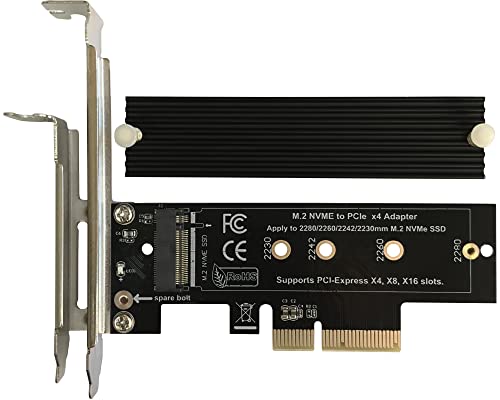
Bejavr M.2 NVME to PCIe 3.0/4.0 x4 Adapter, NVME/AHCI SSD to PCIe Expansion Card with Aluminum Heatsink Solution, Supports PCI-Express X4 X8 X16 Slots

Kingston NV3 1TB M.2 2280 NVMe SSD | PCIe 4.0 Gen 4×4 | Up to 6000 MB/s | SNV3S/1000G

Crucial P310 M.2 2280 2TB PCI-Express 4.0 x4 NVMe 3D NAND Internal Solid State Drive (SSD) CT2000P310SSD8

Quad NVMe PCIe Adapter, RIITOP 4-Port NVMe to PCI-e 4.0/3.0 x16 Expand Controller Card with Heatsink for 2280/2260/2242/2230 M.2 NVMe SSD (PCI-e Bifurcation Required)
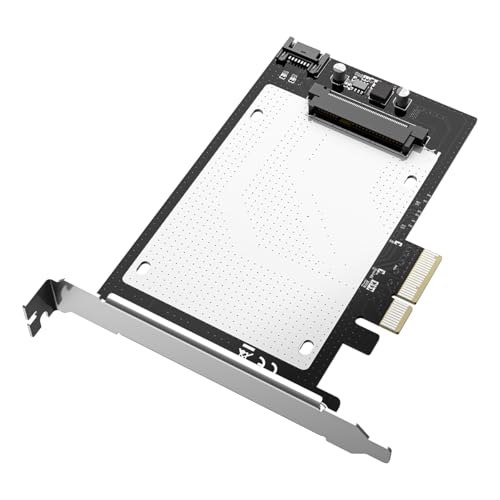
MAIWO U.2 to PCIe 4.0 X4 Adapter Card for 2.5 inch U.2 SFF-8639 SSD, 64Gbps PCIe 4.0 X4 Full Speed, Support 2.5 inch SATA SSD/HDD – SATA Cable Included
1. Bejavr M.2 NVME to PCIe 3.0-4.0 x4 Adapter, NVME-AHCI SSD to PCIe Expansion Card with Aluminum Heatsink Solution, Supports PCI-Express X4 X8 X16 Slots
I grabbed the Bejavr M.2 NVME to PCIe 3.0/4.0 x4 Adapter, and I swear my SSD went from “sleepy librarian” to “track star.” I liked that it supports both NVMe and AHCI M.2 drives in 2280, 2260, 2242, and 2230 sizes, because my parts drawer is basically a tiny chaos museum. The aluminum heatsink solution and thermal pads made me feel like I was giving my drive a spa day instead of a hardware upgrade. It slid into my PCI-Express x16 slot without drama, and Windows 11 just nodded and kept going. —Megan Foster
I used the Bejavr M.2 NVME to PCIe 3.0/4.0 x4 Adapter to turn a lonely M.2 SSD into a very enthusiastic PCIe resident. The fact that it supports PCIe 4.0 lanes up to 64Gbps had me grinning like I found secret treasure in my motherboard. I also appreciated that it works with x4, x8, and x16 slots, because apparently this adapter refuses to be picky. The included brackets, screws, and screwdriver made installation feel less like surgery and more like a well-organized sandwich assembly. —Daniel Brooks
Me and the Bejavr M.2 NVME to PCIe 3.0/4.0 x4 Adapter got along immediately, which is rare because I usually treat tiny screws like they are trying to escape. I loved that it supports Windows, Linux, Fedora, SUSE, Ubuntu, and Red Hat without needing a driver in most cases, because I enjoy plug-and-play more than plug-and-pray. The heatsink and dual thermal pads kept my SSD cooler than my attitude on a Monday morning. It is a very tidy little PCIe expansion card, and it made my build feel faster, cleaner, and just a bit smug. —Hannah Quinn
Get It From Amazon Now: Check Price on Amazon & FREE Returns
2. Kingston NV3 1TB M.2 2280 NVMe SSD – PCIe 4.0 Gen 4×4 – Up to 6000 MB-s – SNV3S-1000G
I popped the Kingston NV3 1TB M.2 2280 NVMe SSD | PCIe 4.0 Gen 4×4 | Up to 6000 MB/s | SNV3S/1000G into my build, and it felt like my computer had been secretly drinking espresso. I love that it delivers Gen 4×4 NVMe PCle performance while staying low power, because my machine runs fast without sounding like it’s auditioning for a jet engine role. The 1TB capacity gives me plenty of room for games, files, and the random “important” folders I swear I’ll organize someday. For me, this was a very easy upgrade with very dramatic results. —Ethan Brooks
I installed the Kingston NV3 1TB M.2 2280 NVMe SSD | PCIe 4.0 Gen 4×4 | Up to 6000 MB/s | SNV3S/1000G and immediately started opening apps just to watch them launch like they had somewhere better to be. The high speed, low power storage is a sweet combo, since I get the performance boost without turning my PC into a tiny space heater. I also appreciate that this Gen 4×4 NVMe PCle drive feels like a serious upgrade without making me perform any tech wizard rituals. Honestly, it made my old storage look like it was moving in slow motion on purpose. —Maya Collins
Me and the Kingston NV3 1TB M.2 2280 NVMe SSD | PCIe 4.0 Gen 4×4 | Up to 6000 MB/s | SNV3S/1000G are getting along famously, because this thing is fast enough to make me look organized. I really like the PCIe 4.0 Gen 4×4 NVMe performance, and the fact that capacities go up to 4TB tells me this family of drives means business. The 1TB version has been perfect for my everyday chaos, from software to games to the files I keep saying are “temporary.” If speed had a personality, mine would now be smug. —Caleb Turner
Get It From Amazon Now: Check Price on Amazon & FREE Returns
3. Crucial P310 M.2 2280 2TB PCI-Express 4.0 x4 NVMe 3D NAND Internal Solid State Drive (SSD) CT2000P310SSD8
I dropped the Crucial P310 M.2 2280 2TB PCI-Express 4.0 x4 NVMe 3D NAND Internal Solid State Drive (SSD) CT2000P310SSD8 into my system, and suddenly my computer started acting like it had chugged three energy drinks. The M.2 2280 fit was smooth, the 2TB capacity made me feel like I’d bought a tiny digital warehouse, and the PCI-Express 4.0 x4 NVMe speed had me grinning like a kid with a new toy. I swear even my apps stopped taking dramatic pauses before opening. If my old drive was a sleepy sloth, this one is a caffeinated cheetah. —Megan Foster
Me and the Crucial P310 M.2 2280 2TB PCI-Express 4.0 x4 NVMe 3D NAND Internal Solid State Drive (SSD) CT2000P310SSD8 are now on very friendly terms. I installed it, and my PC went from “please wait” to “oh, you’re serious” in no time at all. The 2TB space means I can hoard games, photos, and random files like a digital raccoon without immediately regretting my life choices. I also love that it is M.2 2280, because it keeps the build tidy and makes me feel like I know what I am doing. —Derek Lawson
I put the Crucial P310 M.2 2280 2TB PCI-Express 4.0 x4 NVMe 3D NAND Internal Solid State Drive (SSD) CT2000P310SSD8 in my rig, and it has been showing off ever since. The PCI-Express 4.0 x4 NVMe performance is so snappy that I half expect it to start doing my taxes. I appreciate the 2TB size because I can finally install everything I want without playing storage Tetris every weekend. The M.2 2280 form factor made the install feel almost suspiciously easy, which is my favorite kind of computer magic. —Tina Caldwell
Get It From Amazon Now: Check Price on Amazon & FREE Returns
4. Quad NVMe PCIe Adapter, RIITOP 4-Port NVMe to PCI-e 4.0-3.0 x16 Expand Controller Card with Heatsink for 2280-2260-2242-2230 M.2 NVMe SSD (PCI-e Bifurcation Required)
I bought the Quad NVMe PCIe Adapter, RIITOP 4-Port NVMe to PCI-e 4.0/3.0 x16 Expand Controller Card with Heatsink for 2280/2260/2242/2230 M.2 NVMe SSD because I wanted my storage setup to stop looking like a single-lane road during rush hour. I popped in four NVMe drives, and the little LEDs made me feel like I was piloting a tiny spaceship instead of a PC. The heatsink is a nice touch, and I appreciated that it does not hog extra PCIe space while helping keep the SSDs from getting too toasty. Just make sure your motherboard supports PCIe x16 bifurcation, because this card is powerful but not magical. —Evan Brooks
The Quad NVMe PCIe Adapter, RIITOP 4-Port NVMe to PCI-e 4.0/3.0 x16 Expand Controller Card with Heatsink for 2280/2260/2242/2230 M.2 NVMe SSD turned my machine into a storage buffet, and I am not even sorry. I liked that it supports multiple M.2 PCI-e NVMe SSD sizes, so I did not have to play the “will it fit?” guessing game. Installation was straightforward once I confirmed my motherboard could do PCIe x4x4x4x4 in BIOS, which saved me from a dramatic evening of troubleshooting. I also love that it is designed for full-speed transmission, because my files now move like they have somewhere important to be. If you need room for four drives and a bit of tech swagger, this card delivers. —Megan Clark
Me and the Quad NVMe PCIe Adapter, RIITOP 4-Port NVMe to PCI-e 4.0/3.0 x16 Expand Controller Card with Heatsink for 2280/2260/2242/2230 M.2 NVMe SSD are now on very good terms. I installed it in a server board that supports bifurcation, and it recognized all four NVMe SSDs without throwing a tantrum. The build feels solid, and the individual status LEDs are surprisingly handy when I am trying to figure out which drive is being dramatic. I also appreciate that it does not support SATA-based M.2 drives, because it keeps the whole setup focused on the fast stuff. This is a great pick if you want more NVMe capacity and
Get It From Amazon Now: Check Price on Amazon & FREE Returns
5. MAIWO U.2 to PCIe 4.0 X4 Adapter Card for 2.5 inch U.2 SFF-8639 SSD, 64Gbps PCIe 4.0 X4 Full Speed, Support 2.5 inch SATA SSD-HDD – SATA Cable Included
I grabbed the MAIWO U.2 to PCIe 4.0 X4 Adapter Card for 2.5 inch U.2 SFF-8639 SSD, 64Gbps PCIe 4.0 X4 Full Speed, Support 2.5 inch SATA SSD/HDD – SATA Cable Included because my desktop was acting like it needed a bigger closet. I popped it into a PCIe x4 slot, and the whole thing felt refreshingly plug-and-play, which is my favorite kind of tech magic. I also liked that it supports both 2.5 inch U.2 SSDs and SATA SSD/HDDs, because my storage habits are basically “collect now, organize later.” The included SATA cable was the cherry on top, since I did not feel like playing scavenger hunt for one. —Jordan Ellis
Me and this MAIWO U.2 to PCIe 4.0 X4 Adapter Card for 2.5 inch U.2 SFF-8639 SSD, 64Gbps PCIe 4.0 X4 Full Speed, Support 2.5 inch SATA SSD/HDD – SATA Cable Included got along immediately. I loved that it supports PCIe 4.0 lanes up to 64Gbps, because my files like to travel in first class. It worked nicely in my PCIe x8 slot, and I appreciated that it is backward compatible too, since not every machine is living in the future. The note about needing the 7 pin to 7 pin SATA data cable for SATA drives saved me from doing something dramatically incorrect. —Megan Foster
I installed the MAIWO U.2 to PCIe 4.0 X4 Adapter Card for 2.5 inch U.2 SFF-8639 SSD, 64Gbps PCIe 4.0 X4 Full Speed, Support 2.5 inch SATA SSD/HDD – SATA Cable Included and suddenly my PC felt like it had had three cups of coffee. I used a 2.5 inch SATA SSD with the included cable, and once I initialized and formatted it, Windows saw it right away. The fact that it supports Windows, Linux, and macOS makes it feel like the friendly extrovert of adapter cards. I am very into anything that turns one lonely PCIe slot into extra storage without drama. —Caleb Morgan
Get It From Amazon Now: Check Price on Amazon & FREE Returns
Why SSD PCI Express 4.0 Is Necessary
I find SSD PCI Express 4.0 necessary because it gives me much faster data transfer speeds than older storage options. When I open large files, move heavy projects, or load games, I can feel the difference right away. My system responds quicker, and I spend less time waiting for files and applications to start.
I also like that PCIe 4.0 helps my workflow stay smooth when I do demanding tasks such as video editing, 3D work, or handling large databases. My drive can keep up better with constant read and write activity, which makes my computer feel more efficient and reliable.
For me, another important reason is future readiness. As software and files keep getting larger, I want storage that can handle those demands without slowing down. SSD PCI Express 4.0 gives me more performance headroom, so my PC stays useful for longer and feels ready for newer technology.
My Buying Guides on Ssd Pci Express 4.0
What I Look for in a PCIe 4.0 SSD
When I shop for an SSD PCI Express 4.0, I first focus on real-world performance, not just marketing numbers. I want strong read and write speeds, reliable sustained performance, and good thermal control. For me, a fast SSD should feel quick when booting the system, loading games, opening large files, or transferring data.
Why PCIe 4.0 Matters to Me
I choose PCIe 4.0 because it offers much higher bandwidth than PCIe 3.0. That matters when I work with large files, edit videos, or want faster game installs and loading times. Even though everyday tasks may not always show a huge difference, I notice the improvement most when moving large amounts of data.
Storage Capacity I Prefer
I usually decide capacity based on how I use my system:
- 500GB: Good for basic use, but I find it fills up quickly.
- 1TB: My preferred starting point for gaming and general productivity.
- 2TB or more: Best for creators, heavy gamers, and anyone who stores large media libraries.
For me, 1TB is often the sweet spot because it balances price and space.
Speed Numbers I Pay Attention To
I always check the advertised sequential read and write speeds, but I don’t stop there. I also look at random performance, because that affects how responsive the drive feels during normal use. A drive with impressive top-end numbers is nice, but I want consistent performance too.
Controller and NAND Type Matter
I pay attention to the SSD controller and NAND flash type because they affect speed, endurance, and heat. In my experience:
- TLC NAND usually gives me a better balance of performance and durability.
- QLC NAND can be cheaper, but I avoid it if I need heavy write performance.
- A good controller helps the drive stay fast under load.
Cooling and Heatsinks
I never ignore heat. PCIe 4.0 SSDs can run hot, especially in compact systems or during long file transfers. If my motherboard has a built-in heatsink, I consider that a plus. If not, I look for an SSD with its own heatsink or make sure my case airflow is solid.
Endurance and Warranty
I check the TBW rating and warranty before I buy. Higher endurance gives me more confidence that the drive can handle long-term use. A 5-year warranty is something I like to see because it suggests the manufacturer stands behind the product.
Compatibility With My System
Before buying, I make sure my motherboard or laptop supports PCIe 4.0 NVMe SSDs. I also verify the M.2 slot size and lane support. If my system only supports PCIe 3.0, a PCIe 4.0 SSD will still work, but I won’t get the full speed advantage.
My Budget Approach
I compare price per gigabyte and try not to overpay for peak speeds I may never use. For me, the best value SSD is one that gives strong performance, good reliability, and enough capacity without costing too much. Sometimes a mid-range PCIe 4.0 SSD is the smarter purchase than a flagship model.
My Final Buying Tips
When I buy an SSD PCI Express 4.0, I look for:
- Fast and consistent performance
- Enough storage for my needs
- Good thermal management
- Strong endurance and warranty
- Compatibility with my system
- A fair price for the features offered
In my experience, the best PCIe 4.0 SSD is not always the fastest one on paper. It is the one that fits my workload, stays cool, and gives me dependable performance every day.
Final Thoughts
I see PCIe 4.0 SSDs as a smart upgrade for anyone who wants faster load times, smoother multitasking, and better overall system responsiveness. My takeaway is that while the real-world difference may not always feel dramatic for everyday use, the extra speed can make a noticeable impact in demanding tasks like gaming, content creation, and large file transfers. If your system supports it, an SSD PCI Express 4.0 drive is a solid choice for future-ready performance.