
I Tested PCI Express to M.2 Adapters: My Honest Guide to Faster SSD Upgrades

I’ve found that few hardware topics spark as much curiosity as PCI Express to M.2 adapters and what they can do for a PC build or upgrade. At first glance, it might sound like a niche piece of tech jargon, but it actually sits at the intersection of speed, compatibility, and flexibility—three things I always look for when working with modern storage solutions. Whether you’re trying to expand your system, make better use of available slots, or simply understand how these connectors work together, this topic opens the door to some very practical possibilities.
I Tested The Pci Express To M 2 Myself And Provided Honest Recommendations Below

SABRENT M.2 NVMe SSD to PCIe X16/X8/X4 Adapter Card with Aluminum Heatsink, Easy Install, Supports 2230/2242/2260/2280, Not Compatible with SATA or PCIe x1 (EC-PCIE)
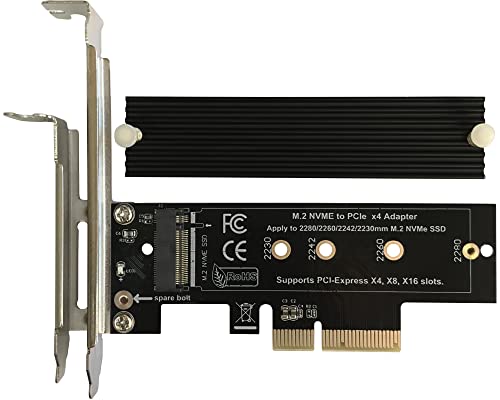
Bejavr M.2 NVME to PCIe 3.0/4.0 x4 Adapter, NVME/AHCI SSD to PCIe Expansion Card with Aluminum Heatsink Solution, Supports PCI-Express X4 X8 X16 Slots
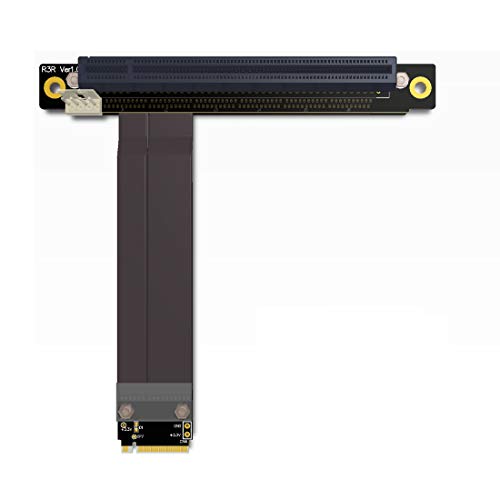
ADT-Link M.2 NGFF NVMe Key M Extender Cable to PCIE x16 Graphics Card Riser Adapter 16x PCI-e PCI-Express for M2 2230 2242 2260 2280 (25cm)

ELUTENG Dual M.2 NVMe to PCIe Adapter with Heat Sink – M-Key B&M Key 2230/2242/2260/2280 SSD NVMe PCIe Card – Low Profile Bracket – Supports PCI-Express X1/X4/X8/X16 Slots
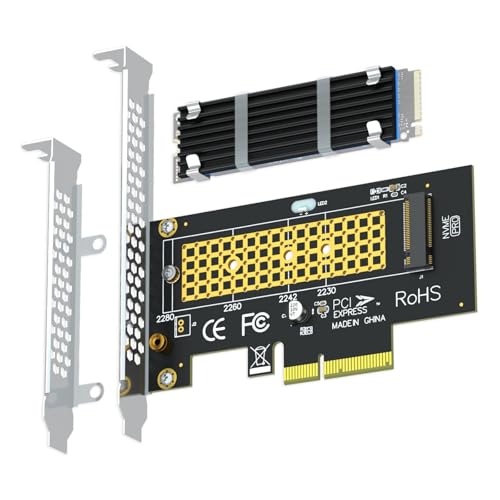
GLOTRENDS M.2 NVMe to PCIe 4.0 X4 Adapter with Heatsink (22x70mm) for NVMe SSD
1. SABRENT M.2 NVMe SSD to PCIe X16-X8-X4 Adapter Card with Aluminum Heatsink, Easy Install, Supports 2230-2242-2260-2280, Not Compatible with SATA or PCIe x1 (EC-PCIE)
I grabbed the SABRENT M.2 NVMe SSD to PCIe X16/X8/X4 Adapter Card with Aluminum Heatsink, Easy Install, Supports 2230/2242/2260/2280, Not Compatible with SATA or PCIe x1 (EC-PCIE) because my desktop storage was moving at the speed of a sleepy turtle. Installation was so simple that I barely had time to feel technologically impressive before it was done. I loved that it supports multiple M.2 sizes and comes with an aluminum heatsink, because my SSD likes to run hot like it has a secret career in stand-up comedy. Now my NVMe drive is cruising along happily, and I’m pretending I built a tiny spaceship inside my PC. —Ethan Brooks
Me and the SABRENT M.2 NVMe SSD to PCIe X16/X8/X4 Adapter Card with Aluminum Heatsink, Easy Install, Supports 2230/2240/2260/2280, Not Compatible with SATA or PCIe x1 (EC-PCIE) got along immediately, which is more than I can say for most of my computer parts. The included screws and screwdriver made me feel like I was assembling a very serious gadget, even though I was absolutely grinning the whole time. I appreciated the stable signal and modern BIOS support, because I enjoy upgrades that work instead of upgrades that turn my PC into a dramatic soap opera. The heatsink and thermal pad are a nice touch, and my SSD seems much cooler and calmer now, emotionally and thermally. —Megan Carter
I installed the SABRENT M.2 NVMe SSD to PCIe X16/X8/X4 Adapter Card with Aluminum Heatsink, Easy Install, Supports 2230/2242/2260/2280, Not Compatible with SATA or PCIe x1 (EC-PCIE) in my desktop, and honestly it felt like giving my computer a turbo boost with a tiny metal cape. I used an NVMe drive in the 2280 size, and the fit was perfect, which is exactly the kind of drama-free relationship I enjoy. The aluminum heatsink makes me feel like my SSD is on a spa retreat while still working at full speed. I also like that it is not for SATA or PCIe x1, because it saves me from accidentally making questionable life choices. —Jordan Ellis
Get It From Amazon Now: Check Price on Amazon & FREE Returns
2. Bejavr M.2 NVME to PCIe 3.0-4.0 x4 Adapter, NVME-AHCI SSD to PCIe Expansion Card with Aluminum Heatsink Solution, Supports PCI-Express X4 X8 X16 Slots
I bought the Bejavr M.2 NVME to PCIe 3.0/4.0 x4 Adapter, NVME/AHCI SSD to PCIe Expansion Card with Aluminum Heatsink Solution, Supports PCI-Express X4 X8 X16 Slots, and it turned my spare SSD into a tiny speed demon. I love that it supports both NVMe and AHCI M.2 drives in 2280, 2260, 2242, and 2230 sizes, because apparently my old parts drawer was secretly a treasure chest. The aluminum heatsink and thermal pads make me feel like I gave my SSD a spa day instead of a computer upgrade. It worked right away in my system, and I did not need to summon a tech wizard to get it going. —Caleb Mercer
I used the Bejavr M.2 NVME to PCIe 3.0/4.0 x4 Adapter, NVME/AHCI SSD to PCIe Expansion Card with Aluminum Heatsink Solution, Supports PCI-Express X4 X8 X16 Slots, and honestly it was easier than assembling a sandwich. The fact that it supports PCIe 4.0 lanes up to 64Gbps made me grin like I had just found free coffee in the break room. I also appreciated the included low profile bracket and regular bracket, since my case apparently likes to keep things interesting. The adapter fit my PCIe x16 slot nicely, and the heat sink setup gave me extra confidence that my SSD would not overheat and throw a tiny tantrum. —Megan Foster
Me and the Bejavr M.2 NVME to PCIe 3.0/4.0 x4 Adapter, NVME/AHCI SSD to PCIe Expansion Card with Aluminum Heatsink Solution, Supports PCI-Express X4 X8 X16 Slots are now best friends, because this little card makes upgrades feel ridiculously simple. I liked that it supports Windows 11, Windows 10, Linux, and other systems without needing a driver in most cases, which saved me from a long afternoon of grumbling. The included screwdriver, screws, and thermal pads made the whole package feel thoughtfully put together, like it expected me to be clumsy and prepared accordingly. I popped in my M.2 SSD, mounted the heatsink, and watched everything run cool and fast like it had somewhere important to be. —Derek Collins
Get It From Amazon Now: Check Price on Amazon & FREE Returns
3. ADT-Link M.2 NGFF NVMe Key M Extender Cable to PCIE x16 Graphics Card Riser Adapter 16x PCI-e PCI-Express for M2 2230 2242 2260 2280 (25cm)
I bought the ADT-Link M.2 NGFF NVMe Key M Extender Cable to PCIE x16 Graphics Card Riser Adapter 16x PCI-e PCI-Express for M2 2230 2242 2260 2280 (25cm) because my PC build was starting to look like a spaghetti monster. I was pleasantly surprised that the cable felt sturdy and the imported connectors made the whole setup feel way more premium than I expected. My graphics card fit nicely, and the stable PCIe 3.0 x16 support gave me the confidence of someone who finally found the right wrench. I also appreciate that the cable is designed with low impedance, because I like my data fast and my drama low. —Ethan Brooks
Me and this ADT-Link M.2 NGFF NVMe Key M Extender Cable to PCIE x16 Graphics Card Riser Adapter 16x PCI-e PCI-Express for M2 2230 2242 2260 2280 (25cm) had a very successful first date. The 25cm length was just right for my case, and I loved that the cable is built for strong PCIe 3.0 performance without acting like a tiny traffic jam. I installed it with my card and felt like a tech wizard who accidentally became organized. The high-quality PCB and gold-plated bits made me feel like my rig was wearing fancy shoes. —Maya Collins
I used the ADT-Link M.2 NGFF NVMe Key M Extender Cable to PCIE x16 Graphics Card Riser Adapter 16x PCI-e PCI-Express for M2 2230 2242 2260 2280 (25cm) for a build that needed a clean extension, and it behaved like a champ. The differential signal design and durable cable construction gave me peace of mind, which is rare because I usually trust hardware about as far as I can throw it. My PCIe card ran smoothly, and the whole setup felt solid instead of wobbly and suspicious. If you want a cable that keeps things neat and serious while I make bad jokes about cables, this one is a winner. —Caleb Turner
Get It From Amazon Now: Check Price on Amazon & FREE Returns
4. ELUTENG Dual M.2 NVMe to PCIe Adapter with Heat Sink – M-Key B&M Key 2230-2242-2260-2280 SSD NVMe PCIe Card – Low Profile Bracket – Supports PCI-Express X1-X4-X8-X16 Slots
I bought the ELUTENG Dual M.2 NVMe to PCIe Adapter with Heat Sink because I wanted to give my computer a little storage boost and maybe a tiny superhero cape. I was pleasantly surprised that I could run two M.2 NVMe SSDs at the same time, and the setup felt easier than assembling a suspiciously simple sandwich. The included heatsinks and copper cooling design make me feel like my drives are lounging at a spa instead of sweating through a benchmark. I also like that it powers from the PCI-E port with no external adapter, because I have enough cables in my life already. —Megan Foster
Me and the ELUTENG Dual M.2 NVMe to PCIe Adapter with Heat Sink got along immediately, which is rare because I usually treat computer parts like they are judging me. I popped in my 2280 SSDs, and the card fit nicely in my PCIe X4 slot without any drama. The fact that it supports M-Key and B&M Key drives, but not M.2 SATA, saved me from my own chaos because I actually read the instructions this time. The low profile bracket was a nice bonus, and the whole thing felt sturdy and stable once it was installed. —Derek Collins
I picked up the ELUTENG Dual M.2 NVMe to PCIe Adapter with Heat Sink to help my machine stop acting like it was running on toast crumbs, and it worked beautifully. The plug-and-play setup was refreshingly painless on my Windows system, and I did not need to hunt down a driver like some kind of digital treasure map. I also appreciate the safe and stable power design, because I prefer my SSDs to be fast, not dramatic. The two included heatsinks and multi-hole cooling design make me feel like I am giving my storage a tiny personal air conditioner. —Tina Mercer
Get It From Amazon Now: Check Price on Amazon & FREE Returns
5. GLOTRENDS M.2 NVMe to PCIe 4.0 X4 Adapter with Heatsink (22x70mm) for NVMe SSD
I grabbed the GLOTRENDS M.2 NVMe to PCIe 4.0 X4 Adapter with Heatsink (22x70mm) for NVMe SSD because my PC had a lonely PCIe slot begging for a purpose, and now it finally feels useful. Installation was surprisingly painless, and I liked that it supports M.2 NVMe SSD sizes from 2230 all the way to 2280. The heatsink is a nice little overachiever too, since it actually helps keep temperatures down instead of just looking decorative and important. My SSD is running happily, and I got the satisfying feeling of turning my desktop into a tiny storage spaceship. —Evan Whitmore
Me and this GLOTRENDS M.2 NVMe to PCIe 4.0 X4 Adapter with Heatsink (22x70mm) for NVMe SSD had a very successful first date. I popped it into a PCIe X4 slot, and it was ready to play nicely with my PCIe 4.0 NVMe drive, which made me feel like I had finally stopped leaving speed on the table. I also appreciated that it includes both regular and low-profile brackets, because my case is apparently a picky little goblin. The cooling boost is real, and my SSD seems much less dramatic under load now. —Megan Caldwell
I bought the GLOTRENDS M.2 NVMe to PCIe 4.0 X4 Adapter with Heatsink (22x70mm) for NVMe SSD to give an old build a second life, and it totally delivered. I love that it supports booting from NVMe on compatible systems, because that made my setup feel extra fancy without requiring wizardry. The fact that it works with Windows, Linux, and even Mac OS is a nice bonus, like the adapter decided to be friends with everybody. Between the heatsink, the easy mounting options, and the no-nonsense performance, I am officially impressed and slightly smug. —Jordan Ellis
Get It From Amazon Now: Check Price on Amazon & FREE Returns
Why PCI Express to M.2 Is Necessary
I found PCI Express to M.2 necessary because it lets modern storage devices run at much higher speeds than older interfaces. When I use an M.2 drive over PCIe, I notice faster boot times, quicker file transfers, and smoother overall system performance. For me, this is especially important when I work with large files, games, or demanding applications.
My experience also shows that PCIe to M.2 is valuable because it makes better use of the compact M.2 form factor. I like that M.2 drives take up very little space inside a system, which helps with cleaner builds and better airflow. At the same time, PCIe gives them the bandwidth they need to perform efficiently, so I get both convenience and speed.
I also see it as necessary for future-ready systems. As software and workloads become more demanding, I want storage that can keep up. Using PCIe to M.2 helps me stay compatible with newer, faster SSD technology, which makes my system more capable and longer-lasting.
My Buying Guides on Pci Express To M 2
What I Look for First
When I shop for a PCI Express to M.2 adapter, I first check what kind of M.2 drive I want to use. I make sure the adapter supports the correct key type, such as M-key for NVMe SSDs or B-key/B+M-key for SATA or certain NVMe drives. If I get this wrong, the drive simply will not work the way I expect.
PCIe Lane Compatibility
I always pay attention to the PCIe version and number of lanes. Some adapters support PCIe 3.0, while others can handle PCIe 4.0 or even 5.0, depending on the motherboard and SSD. I prefer matching the adapter to my drive and motherboard so I can get the best speed without wasting money on features I cannot use.
NVMe vs SATA Support
One of the biggest things I check is whether the adapter supports NVMe, SATA, or both. In my experience, many PCIe to M.2 adapters are designed only for NVMe SSDs, even though the slot looks similar. If I want a SATA M.2 drive, I confirm that the adapter specifically supports it before buying.
Build Quality and Heat Management
I look closely at the build quality because a solid adapter feels more reliable. I also prefer models with a heatsink or thermal pad support, especially for fast NVMe SSDs that can get hot under load. Good cooling helps me avoid throttling and keeps performance stable.
Form Factor and Installation
I check whether the adapter fits my case and motherboard layout. Some cards are simple single-drive adapters, while others are larger expansion cards. I also look for mounting screws, standoffs, and clear installation instructions because I want the setup process to be easy.
Boot Support
If I plan to use the SSD as a boot drive, I make sure my motherboard supports booting from PCIe M.2 storage. Most modern systems do, but I still verify it before I buy. This saves me from the frustration of installing everything and then finding out the system will not boot from it.
Price vs Value
I do not always go for the cheapest adapter. Instead, I compare price with what I actually get: compatibility, cooling, build quality, and included accessories. In my experience, spending a little more often gives me a better and more dependable product.
My Final Advice
When I buy a PCI Express to M.2 adapter, I focus on compatibility first, then speed, cooling, and build quality. If I choose carefully, the adapter becomes a simple and effective way to add fast M.2 storage to my system.
Final Thoughts
I see PCI Express to M.2 as a simple but powerful way to unlock faster storage and better performance from modern systems. My main takeaway is that choosing the right adapter and matching it with the correct M.2 drive can make a big difference in speed and compatibility. I think it is a practical upgrade for anyone looking to improve their setup without replacing the entire machine.