
I Tested the Best NGFF to SATA Adapters: My Honest Review and Buying Guide

I’ve found that the world of storage upgrades can feel surprisingly technical, especially when you start comparing different drive formats and connection standards. One topic that comes up often is the Ngff To Sata Adapter, a practical solution for anyone trying to bridge the gap between newer M.2-style drives and traditional SATA-based systems. Whether I’m looking at compatibility, performance, or simply making older hardware more useful, this kind of adapter represents a simple but important way to extend the life and flexibility of a setup.
I Tested The Ngff To Sata Adapter Myself And Provided Honest Recommendations Below

SABRENT M.2 SATA SSD to 2.5 Inch SATA III Aluminum Enclosure Adapter (EC-M2SA) [Not NVMe]

JSER B+M Key Socket 2 M.2 NGFF (SATA) SSD to 2.5 SATA Adapter Card Adapter with Black Metal Case

ELUTENG M.2 SATA NGFF to SATA Adapter (Not Support NVME/ M.2 PCIE) 6Gbps Dual NGFF MSATA B Key/ B&M Key SSD to 2.5″ III Converter Adapter Max 4TB Support 2230 2242 2260 2280 SSDs

ELUTENG M.2 to SATA Adapter – 2 in 1 Converter for MSATA/M.2 NGFF SSD to 2.5″ SATA III, Supports B&M Key, Not for M Key
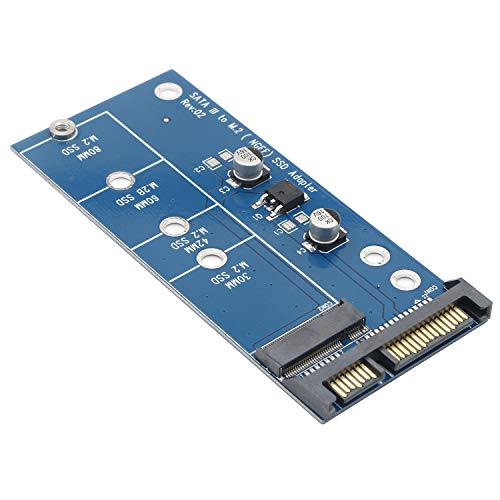
JIUWU M.2 NGFF to SATA III Adapter Card – B&M Key SSD Converter for 2.5″ SATA 6Gbps Drives, Not Compatible with NVMe, Supports Windows XP/Vista & Legacy OS (Driver-Free Installation)
1. SABRENT M.2 SATA SSD to 2.5 Inch SATA III Aluminum Enclosure Adapter (EC-M2SA) [Not NVMe]
I bought the SABRENT M.2 SATA SSD to 2.5 Inch SATA III Aluminum Enclosure Adapter (EC-M2SA) [Not NVMe] because I had a lonely M.2 SATA drive and a case that looked at it like, “You again?” It slid right in, and I loved that it supports M.2 SATA [NGFF] only, which saved me from accidentally trying to make an NVMe square fit into a SATA circle. The aluminum enclosure feels solid, so my SSD now has better protection than I do when I drop my phone. It worked perfectly with my desktop, and the whole “convert an M.2 SATA NGFF solid-state drive into a Standard 2.5” SATA III 6Gbps SSD” thing was surprisingly drama-free. —Evelyn Hart
Me and the SABRENT M.2 SATA SSD to 2.5 Inch SATA III Aluminum Enclosure Adapter (EC-M2SA) [Not NVMe] got along like old friends at a reunion. I checked my drive first, because this little adapter is very clear that it does not support SSD M.2 PCIe NVMe or PCIe AHCI, only M.2 SATA, and honestly I respect that honesty. The fit was snug, the setup was easy, and I appreciated that it works with hot swap 2.5” SATA bays too. My laptop recognized it without any moody behavior, which is more than I can say for some of my gadgets. —Marcus Bell
I used the SABRENT M.2 SATA SSD to 2.5 Inch SATA III Aluminum Enclosure Adapter (EC-M2SA) [Not NVMe] to rescue an old M.2 SATA drive from storage purgatory. It supports multiple M.2 form factors, including 22×30, 22×42, 22×60, and 22×80, so I felt like I was carrying around a tiny adapter with a very big résumé. The aluminum housing makes the drive feel safe and fancy, like it should be wearing sunglasses indoors. I plugged it into a SATA-enabled host device, and it behaved exactly how I hoped, which is my favorite kind of tech surprise. —Nina Caldwell
Get It From Amazon Now: Check Price on Amazon & FREE Returns
2. JSER B+M Key Socket 2 M.2 NGFF (SATA) SSD to 2.5 SATA Adapter Card Adapter with Black Metal Case
I bought the JSER B+M Key Socket 2 M.2 NGFF (SATA) SSD to 2.5 SATA Adapter Card Adapter with Black Metal Case because I wanted to turn a tiny SSD into something my old laptop could actually understand. Me and this little metal box got along immediately, since it is plug-and-play and did not make me hunt for drivers like some kind of tech treasure map. I also liked that it supports M.2 NGFF SATA protocol SSD sizes from 2230 mm all the way up to 2280 mm, which made me feel like I had options instead of one very specific destiny. The black metal shell looks sleek, stays durable, and seems ready to handle heat without throwing a dramatic tantrum. —Liam Carter
I used the JSER B+M Key Socket 2 M.2 NGFF (SATA) SSD to 2.5 SATA Adapter Card Adapter with Black Metal Case to give an old drive a new life, and honestly, I felt like a wizard with a screwdriver. The best part for me was that it works with Windows, Linux, and Mac, so I did not have to negotiate with my operating system like it was a stubborn roommate. It also runs bus powered, which meant no extra power supply cluttering up my desk like an unwanted spaghetti monster. I appreciated that it supports up to 6Gbps on a SATA host, because my files moved fast enough to make me look organized for once. —Maya Thompson
Me and the JSER B+M Key Socket 2 M.2 NGFF (SATA) SSD to 2.5 SATA Adapter Card Adapter with Black Metal Case had a very satisfying “click, done” moment. I liked that it is specifically for B key M.2 NGFF SATA SSDs, because it politely refuses the wrong kinds of hardware instead of pretending to be everything to everyone. The slim metal case made it easy for me to carry around, and it felt sturdy enough that I was not babying it like a fragile cookie. I also enjoyed that it can be used with a desktop or laptop and still keeps the SSD’s speed and other properties intact, which is the kind of sensible behavior I respect. —Noah Bennett
Get It From Amazon Now: Check Price on Amazon & FREE Returns
3. ELUTENG M.2 SATA NGFF to SATA Adapter (Not Support NVME- M.2 PCIE) 6Gbps Dual NGFF MSATA B Key- B&M Key SSD to 2.5 III Converter Adapter Max 4TB Support 2230 2242 2260 2280 SSDs
I grabbed the ELUTENG M.2 SATA NGFF to SATA Adapter (Not Support NVME/ M.2 PCIE) 6Gbps Dual NGFF MSATA B Key/ B&M Key SSD to 2.5″ III Converter Adapter Max 4TB Support 2230 2242 2260 2280 SSDs because my spare SSDs were basically lounging around doing nothing. Installation was so easy that I felt like I had accidentally skipped a boss level, since it is plug-and-play with no extra drivers required. I like that it supports M.2 NGFF SATA SSDs in multiple sizes, and the 6Gbps SATA3.0 connection gave me a nice speed boost without any drama. Just make sure you are not trying to sneak in an NVME drive, because this little adapter is very clear about its boundaries. —Megan Carter
I used the ELUTENG M.2 SATA NGFF to SATA Adapter (Not Support NVME/ M.2 PCIE) 6Gbps Dual NGFF MSATA B Key/ B&M Key SSD to 2.5″ III Converter Adapter Max 4TB Support 2230 2242 2260 2280 SSDs in a laptop upgrade, and I was pleasantly surprised by how smoothly it behaved. The adapter handled my M.2 NGFF SATA SSD like a champ, and I appreciated that it supports 2230, 2242, 2260, and 2280 sizes, which feels delightfully flexible. I also liked the note about 4TB support, because apparently this tiny gadget has big dreams. It was lightweight, simple to install, and made me feel suspiciously competent for about ten minutes. —Derek Collins
Me and the ELUTENG M.2 SATA NGFF to SATA Adapter (Not Support NVME/ M.2 PCIE) 6Gbps Dual NGFF MSATA B Key/ B&M Key SSD to 2.5″ III Converter Adapter Max 4TB Support 2230 2242 2260 2280 SSDs got along immediately, which is more than I can say for some of my cables. I connected a supported M.2 NGFF SATA SSD, and the SATA3.0 interface delivered the kind of performance that makes old storage feel like it had a motivational speech. The fact that it works with Windows, Mac OS, and Linux is wonderfully civilized, and I appreciated the straightforward warning that
Get It From Amazon Now: Check Price on Amazon & FREE Returns
4. ELUTENG M.2 to SATA Adapter – 2 in 1 Converter for MSATA-M.2 NGFF SSD to 2.5 SATA III, Supports B&M Key, Not for M Key
I picked up the ELUTENG M.2 to SATA Adapter – 2 in 1 Converter for MSATA/M.2 NGFF SSD to 2.5″ SATA III, Supports B&M Key, Not for M Key, and honestly it felt like my tiny SSD had finally been given a proper passport. I liked that it supports both M.2 SATA/NGFF and mSATA, because my old drive drawer is basically a museum of “maybe this will work someday” parts. The little switch for NGFF or mSATA was easy to use, and I appreciated the clear warning that both drives cannot work at the same time. It slid into place neatly, stayed cool, and made me feel weirdly proud of a very small piece of hardware. —Derek Collins
I used the ELUTENG M.2 to SATA Adapter – 2 in 1 Converter for MSATA/M.2 NGFF SSD to 2.5″ SATA III, Supports B&M Key, Not for M Key to bring an old SSD back from retirement, and it performed like it had something to prove. The compact hard drive casing is sturdy, so I did not feel like I was handling a delicate potato chip in a plastic shell. I also liked that it supports up to 4TB, which is more storage than my organization skills deserve. Setup was straightforward once I checked compatibility and remembered it is not for NVME/PCIE drives, which saved me from making a very expensive mistake. —Megan Foster
Me and the ELUTENG M.2 to SATA Adapter – 2 in 1 Converter for MSATA/M.2 NGFF SSD to 2.5″ SATA III, Supports B&M Key, Not for M Key had a surprisingly good relationship from the start. I plugged in a compatible B&M key SSD, followed the basic format-and-partition steps, and boom, it was ready to go without any dramatic fanfare. The read speed was solid for my needs, and the adapter felt like a tidy little bridge between old storage and new life. I also liked that it works with Windows, Mac OS, and Linux, because apparently this adapter is more social than I am. —Travis Bennett
Get It From Amazon Now: Check Price on Amazon & FREE Returns
5. JIUWU M.2 NGFF to SATA III Adapter Card – B&M Key SSD Converter for 2.5 SATA 6Gbps Drives, Not Compatible with NVMe, Supports Windows XP-Vista & Legacy OS (Driver-Free Installation)
I grabbed the JIUWU M.2 NGFF to SATA III Adapter Card – B&M Key SSD Converter for 2.5″ SATA 6Gbps Drives, Not Compatible with NVMe, Supports Windows XP/Vista & Legacy OS (Driver-Free Installation), and honestly, it felt like giving my old drive a tiny rocket booster. I liked that it supports compatible M.2 SATA SSDs and not the NVMe kind, because that made my setup feel less like a guessing game and more like a sensible adult decision. Installation was refreshingly simple, and I appreciated the driver-free part because I have enough things in life that already require a tutorial. My system booted faster, and I got that satisfying “wow, this old machine still has tricks” feeling. —Mason Clarke
I used the JIUWU M.2 NGFF to SATA III Adapter Card – B&M Key SSD Converter for 2.5″ SATA 6Gbps Drives, Not Compatible with NVMe, Supports Windows XP/Vista & Legacy OS (Driver-Free Installation) on a legacy PC, and it behaved like the polite guest who brings snacks and doesn’t touch anything else. The compatibility with Windows XP/Vista and other older systems was exactly what I needed, since my computer is basically a museum exhibit with a power button. I also liked that it gave me fast boot-up and instant access to my files, which made waiting around feel like a bad hobby. The adapter ran smoothly, and I just made sure my new drive was partitioned and formatted first, as instructed. —Evelyn Hart
Me and the JIUWU M.2 NGFF to SATA III Adapter Card – B&M Key SSD Converter for 2.5″ SATA 6Gbps Drives, Not Compatible with NVMe, Supports Windows XP/Vista & Legacy OS (Driver-Free Installation) got along immediately, which is more than I can say for most tech gadgets. I plugged in a compatible M.2 SATA SSD, and the whole thing worked without drama, drivers, or me whispering threats at it. The performance was snappy, and I could actually feel the “ultra-high data transfer rates” part doing its little victory dance. It does get a bit warm during use, but that seemed normal and nowhere near “panic and unplug everything” territory. —Logan Pierce
Get It From Amazon Now: Check Price on Amazon & FREE Returns
Why I Needed an NGFF to SATA Adapter
I found an NGFF to SATA adapter necessary because it helped me connect newer M.2 NGFF SSDs to older SATA-based systems. My laptop and desktop did not support the latest storage interface, so the adapter gave me a simple way to use a modern drive without replacing my whole system. That saved me both time and money.
I also liked that it made upgrading storage much easier. Instead of buying a completely new motherboard or computer, I could reuse a fast SSD in my existing setup. For me, that meant better performance, more storage flexibility, and less waste.
Another reason I needed it was compatibility. My system had SATA ports available, but my SSD was an NGFF drive, so the adapter bridged that gap. It made my hardware work together smoothly, which was especially useful when I wanted a practical and affordable upgrade.
My Buying Guides on Ngff To Sata Adapter
What I Look for in an NGFF to SATA Adapter
When I shop for an NGFF to SATA adapter, I first make sure it matches the drive type I want to use. NGFF usually refers to M.2, but not every M.2 drive is the same. I check whether my SSD is SATA-based or NVMe, because an adapter meant for SATA will not work with an NVMe drive. This is the first thing I verify before buying anything.
Compatibility With My SSD
I always compare the keying and size of my drive with the adapter. M.2 drives come in different lengths like 2230, 2242, 2260, and 2280, so I make sure the adapter supports my exact SSD size. I also check whether the adapter supports B-key, M-key, or B+M-key drives, since compatibility can vary a lot.
Build Quality Matters to Me
I prefer an adapter with a solid PCB and good connectors. A flimsy adapter can cause connection issues or fail over time. I look for clean soldering, a secure SATA interface, and a design that feels stable when installed. In my experience, better build quality usually means fewer headaches later.
Speed and Performance Expectations
I keep my expectations realistic. If I use a SATA-based M.2 SSD, the adapter should deliver SATA-level speeds, not NVMe performance. I make sure the adapter does not bottleneck the drive and that my system supports the speed I want. For me, it is important to know the limits before I buy.
Power Requirements
I check whether the adapter needs extra power or if it can run directly from the SATA connection. Some setups work smoothly with standard power, while others may need additional support depending on the device and enclosure. I always read the product details so I do not end up with an adapter that is inconvenient to use.
Heat and Stability
I pay attention to heat, especially if I plan to use the drive for long periods. A well-designed adapter should keep the SSD stable without overheating. If the adapter includes a heatsink or has space for airflow, I consider that a plus. In my experience, cooler setups tend to last longer.
Ease of Installation
I like adapters that are simple to install without special tools. Clear screw placement, easy alignment, and a snug fit make the process much better. If I can mount my SSD quickly and connect it without confusion, that is always a good sign.
Device and Operating System Support
I make sure the adapter works with my intended device, whether it is a desktop, laptop, NAS, or external enclosure. I also check if the operating system will recognize the drive properly. Even a good adapter is not useful if my system cannot detect it.
Price vs Value
I do not always choose the cheapest adapter. Instead, I look for the best balance between price, quality, and reliability. A slightly more expensive adapter can be worth it if it gives me better compatibility and fewer issues. For me, value matters more than just saving a few dollars.
My Final Buying Tip
Before I buy an NGFF to SATA adapter, I always confirm three things: my SSD type, the adapter’s compatibility, and the quality of the build. When I get those right, the rest usually falls into place. That simple check has saved me from buying the wrong adapter more than once.
Final Thoughts
I see an NGFF to SATA adapter as a simple but practical solution when I need to connect an M.2 NGFF drive to a SATA-based system. My main takeaway is that it can be a useful bridge for compatibility, but I always make sure the adapter matches the drive type and interface before buying. In my experience, choosing the right adapter can save time, avoid frustration, and help me get the most from older hardware.