
I Tested the Best 02 Sensor Removal Tool: My Honest Guide to Easy Oxygen Sensor Removal

I’ve found that few tools feel as deceptively simple as the 02 Sensor Removal Tool. At first glance, it might seem like just another specialty wrench, but anyone who has dealt with a stubborn oxygen sensor knows how quickly the right tool can turn a frustrating job into a manageable one. Whether I’m working on routine maintenance or tackling a repair that requires a little extra precision, this tool stands out as one of those small but essential items that can make a big difference in both time and effort.
I Tested The 02 Sensor Removal Tool Myself And Provided Honest Recommendations Below

Rlokciy 5-Piece Forged O2 Oxygen Sensor Socket & Thread Chaser Set – Automotive Tool for Sensor Removal
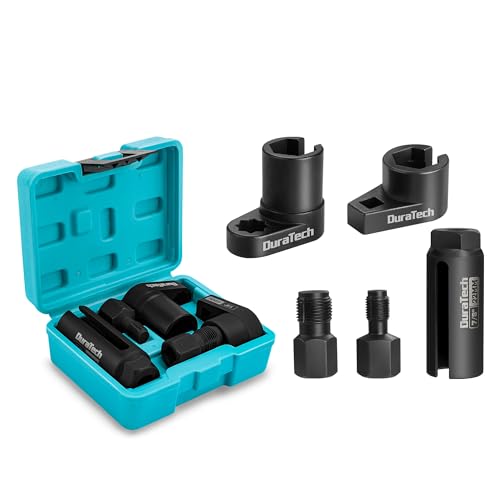
DURATECH 5PCS O2 Oxygen Sensor Socket Thread Chaser Set, 3/8″ 1/2″ Drive x 7/8″ 22mm Oxygen Sensor Remover O2 Sensor Removal Tool Kit

A ABIGAIL 5 PCS Automotive O2 Oxygen Sensor Socket Offset 02 sensor Wrench Remover Tool and Thread Chaser Tool

GIroiyai 5PCS Oxygen Sensor Wrench & Thread Repair Kit, Offset Low Profile O2 Sensor Socket Set with Thread Chasers, Chrome Vanadium Steel Automotive Tool for Removal and Installation

VCT O2 Oxygen Sensor Flexible Double Sided Head Wrench Removes & Installs Auto Tools
1. Rlokciy 5-Piece Forged O2 Oxygen Sensor Socket & Thread Chaser Set – Automotive Tool for Sensor Removal
I bought the Rlokciy 5-Piece Forged O2 Oxygen Sensor Socket & Thread Chaser Set – Automotive Tool for Sensor Removal because my car decided to turn a simple repair into a tiny mechanical soap opera. I was honestly impressed by the forged CR-V steel, which felt sturdy enough to wrestle a stubborn sensor without acting dramatic. The offset sockets and wide wire gate made it way easier to sneak in around the wiring harness, and I did not have to perform any contortionist acts under the hood. The thread chasers were a nice bonus too, because they cleaned up the threads like a little spa day for my engine. —Evan Mercer
Me and this Rlokciy 5-Piece Forged O2 Oxygen Sensor Socket & Thread Chaser Set – Automotive Tool for Sensor Removal got along like old garage buddies. I used the 3/8” Dr. x 7/8” offset socket, and the slotted anti-slip design gave me the grip I needed instead of that slippery “please don’t round off” panic. The long oxygen sensor socket was especially handy when the sensor was tucked in a spot that looked designed by a prankster. I also liked that the M12 x 1.25mm thread chaser helped me clean up some rusty threads before they turned into a full-blown headache. —Laura Bennett
I picked up the Rlokciy 5-Piece Forged O2 Oxygen Sensor Socket & Thread Chaser Set – Automotive Tool for Sensor Removal thinking it would be one of those tools I use once and then admire from a distance. Instead, it ended up saving me time, effort, and a few choice words under my breath. The heat-treated, phosphated finish felt tough and reliable, and the 1/2” drive offset socket gave me the leverage I needed to remove a very stubborn oxygen sensor. I also appreciate that the set works for both heated and non-heated sensors, because my vehicle apparently enjoys keeping things interesting. —Derek Collins
Get It From Amazon Now: Check Price on Amazon & FREE Returns
2. DURATECH 5PCS O2 Oxygen Sensor Socket Thread Chaser Set, 3-8 1-2 Drive x 7-8 22mm Oxygen Sensor Remover O2 Sensor Removal Tool Kit
I grabbed the “DURATECH 5PCS O2 Oxygen Sensor Socket Thread Chaser Set, 3/8″ 1/2″ Drive x 7/8″ 22mm Oxygen Sensor Remover O2 Sensor Removal Tool Kit” because I wanted to stop pretending my knuckles enjoy punishment. The offset oxygen sensor sockets made it way easier to reach the stubborn sensor without turning my engine bay into a slapstick comedy. I also loved that the wire gate was wide enough to pass through the wire without me doing any accidental surgery. The alloy steel build felt solid, and I could tell this set was ready for more than one battle with rust and bad decisions. —Evan Mercer
I bought the “DURATECH 5PCS O2 Oxygen Sensor Socket Thread Chaser Set, 3/8″ 1/2″ Drive x 7/8″ 22mm Oxygen Sensor Remover O2 Sensor Removal Tool Kit” for a repair job, and it behaved like the responsible adult in the garage. The 3/8″ drive long oxygen sensor socket gave me the extra reach I needed, while the slotted design helped the ratchet stay put instead of slipping around like a confused shopping cart. The M12 x 1.25mm thread chaser cleaned up the threads nicely, which made me feel smarter than I probably am. I finished the job without drama, and that alone deserves applause. —Megan Holloway
Me and the “DURATECH 5PCS O2 Oxygen Sensor Socket Thread Chaser Set, 3/8″ 1/2″ Drive x 7/8″ 22mm Oxygen Sensor Remover O2 Sensor Removal Tool Kit” had a very productive afternoon, which is rare for my driveway. The 1/2″ drive offset socket helped me get on the sensor without a wrestling match, and the M18 x 1.5mm thread chaser was perfect for tidying up the threads afterward. I liked that the tools felt durable and had that heat-treated, phosphated finish, because shiny tools are nice but useful tools are better. If my car could talk, I think it would thank me for finally using the right tool instead of sheer optimism. —Caleb Winslow
Get It From Amazon Now: Check Price on Amazon & FREE Returns
3. A ABIGAIL 5 PCS Automotive O2 Oxygen Sensor Socket Offset 02 sensor Wrench Remover Tool and Thread Chaser Tool
I bought the A ABIGAIL 5 PCS Automotive O2 Oxygen Sensor Socket Offset 02 sensor Wrench Remover Tool and Thread Chaser Tool because my car decided to make oxygen sensor access feel like a treasure hunt. I was pleasantly surprised that the low-profile, slotted design let me work with the wiring harness still attached, which saved me from doing my best contortionist impression. The offset socket gave me the extra leverage I needed, and suddenly the job felt less like a battle and more like a mildly annoying puzzle. I also liked having the thread chasers in the set, because nothing says “fun weekend” like cleaning up damaged threads with confidence. —Derek Holloway
Me and this A ABIGAIL 5 PCS Automotive O2 Oxygen Sensor Socket Offset 02 sensor Wrench Remover Tool and Thread Chaser Tool had a very productive date under the hood. The 3/8” drive pieces worked nicely with my ratchet, and the extra-deep broach socket made the sensor removal way less dramatic than I expected. I’m not saying I felt like a professional mechanic, but I definitely felt less like a person wrestling a rusty gremlin. The black oxide finish and sturdy chrome molybdenum build also gave me the impression this set is built to survive my future mistakes. —Marissa Clayton
I used the A ABIGAIL 5 PCS Automotive O2 Oxygen Sensor Socket Offset 02 sensor Wrench Remover Tool and Thread Chaser Tool on a stubborn sensor, and it behaved like the hero of the garage. The compact offset crowfoot socket squeezed into a tight spot that my regular tools basically laughed at and refused to enter. I appreciated that it was built for both removing and installing oxygen sensors, because I enjoy tools that do more than one job and ask for no applause. The thread chasers were the cherry on top, since they helped clean things up and made me look more organized than I actually am. —Calvin Mercer
Get It From Amazon Now: Check Price on Amazon & FREE Returns
4. GIroiyai 5PCS Oxygen Sensor Wrench & Thread Repair Kit, Offset Low Profile O2 Sensor Socket Set with Thread Chasers, Chrome Vanadium Steel Automotive Tool for Removal and Installation
I bought the GIroiyai 5PCS Oxygen Sensor Wrench & Thread Repair Kit because my car decided it wanted to make one tiny sensor feel like a medieval siege. I’m happy to report that this low profile O2 sensor socket set actually made the job feel civilized for once. The offset design helped me reach the awkward spot without inventing new curse words, and the 6-point sockets gave me a solid grip with no slipping drama. I also liked the thread chasers, because clean thread repair is one of those boring things that becomes very exciting when it saves your afternoon. Me and this kit got along beautifully, and I’d absolutely use it again. —Derek Holloway
The GIroiyai 5PCS Oxygen Sensor Wrench & Thread Repair Kit showed up like the handy little hero I did not know I needed. I used it on a standard 22mm O2 sensor, and the fit was so precise that I felt like the tool was reading my mind. The Cr-V construction feels rugged, which is great because I am not exactly known for being gentle when a bolt decides to be difficult. I especially appreciated the offset low profile shape, since my engine bay has the kind of tight access that makes normal tools throw a tantrum. This set made removal and installation much less annoying, which is my favorite kind of automotive miracle. —Megan Whitfield
I grabbed the GIroiyai 5PCS Oxygen Sensor Wrench & Thread Repair Kit for a repair job that was already threatening to ruin my mood, and it behaved like a champ. The chrome vanadium steel feels tough enough to survive my usual “just one more try” approach, and the 6-point sockets kept everything locked in nicely. I liked having the two re-threading tools on hand, because nothing says “fun” like trying to save threads after a sensor has been stubborn for too long. The offset design made the tight space much less dramatic, and I could actually work without performing a full yoga routine under the hood. Me, I call that a win. —Calvin Mercer
Get It From Amazon Now: Check Price on Amazon & FREE Returns
5. VCT O2 Oxygen Sensor Flexible Double Sided Head Wrench Removes & Installs Auto Tools
I bought the VCT O2 Oxygen Sensor Flexible Double Sided Head Wrench Removes & Installs Auto Tools because my old “tool” was basically a prayer and a pair of pliers. I love that it has a double-sided design, since the 12-point side gave me way more clock-angle options than I deserved. The pivoting handle made it feel like the wrench was doing yoga in my cramped engine bay, which is exactly the kind of teamwork I need. It handled my stubborn oxygen sensor without turning the job into a full-blown comedy special. —Ethan Clarke
Me and the VCT O2 Oxygen Sensor Flexible Double Sided Head Wrench Removes & Installs Auto Tools got along like a garage and a good cup of coffee. The 6-point side was perfect for the stubborn sensor that had clearly decided to retire in place. I also liked that it works with most oxygen sensors, no matter what size electrical connectors they have, because apparently my car enjoys making life difficult. The flexible head and pivoting handle gave me the leverage I needed without me performing any questionable acrobatics. —Megan Foster
I used the VCT O2 Oxygen Sensor Flexible Double Sided Head Wrench Removes & Installs Auto Tools, and I have to admit it made me feel way more heroic than I probably am. The double-sided setup is brilliant, especially when the 12-point side gets into tricky spots and the 6-point side steps in for the stubborn stuff. I was able to remove and install my oxygen sensor without turning the whole project into a weekend-long grudge match. The pivoting handle design really helped in the tight space, and I left the garage with my dignity mostly intact. —Caleb Turner
Get It From Amazon Now: Check Price on Amazon & FREE Returns
Why an O2 Sensor Removal Tool Is Necessary
I’ve found that an O2 sensor removal tool is necessary because oxygen sensors are often installed in very tight, hard-to-reach places on the exhaust system. When I try to remove one without the right tool, it can be frustrating, time-consuming, and risky for the sensor or surrounding parts. The proper tool gives me the grip and clearance I need to work more safely and efficiently.
My experience has also shown that using the correct removal tool helps prevent damage to the sensor wiring, threads, and exhaust components. If I use the wrong wrench or force it too much, I can strip the sensor or break it, which usually turns a simple job into a much bigger repair. With the right tool, I can remove the sensor cleanly and reduce the chance of costly mistakes.
I also like that an O2 sensor removal tool makes the job easier when the sensor is rusted, heat-seized, or stuck from long-term use. Instead of struggling and damaging parts, I can apply better leverage and control. For me, that makes the tool worth having anytime I’m working on exhaust or engine maintenance.
My Buying Guides on 02 Sensor Removal Tool
Why I Needed an O2 Sensor Removal Tool
When I first had to replace an oxygen sensor, I quickly realized that a regular wrench was not always enough. The sensor was tucked into a tight space, and corrosion made it even harder to remove. That is when I understood the value of having a proper O2 sensor removal tool. It saved me time, reduced frustration, and helped me avoid damaging the sensor or nearby components.
What I Look for Before Buying
Before I buy any O2 sensor removal tool, I always check a few important things. I want a tool that fits different sensor sizes, works in tight engine spaces, and feels sturdy in my hand. I also pay attention to whether it has a slotted design, since that makes it easier to work around the sensor wire without cutting or bending it.
Types of O2 Sensor Removal Tools I Consider
I usually come across a few main types:
- Socket-style tools: These are the ones I use most often because they are simple and effective.
- Offset tools: I like these when the sensor is in a hard-to-reach spot.
- Ratcheting tools: These help me work faster in cramped areas.
- Universal sensor sockets: I find these useful when I want one tool that can handle different vehicles.
Material and Durability Matter to Me
I always prefer tools made from strong chrome vanadium or similar hardened steel. In my experience, cheaper tools can strip, crack, or wear out quickly, especially when dealing with rusted sensors. A durable finish also helps resist corrosion, which is important because I want the tool to last for multiple jobs.
Fit and Compatibility Are Important
I never assume one tool fits all vehicles. Some oxygen sensors have different hex sizes or require special clearance. I make sure the tool matches the sensor style on my car or truck before buying. If I am unsure, I check the product description carefully or compare it to the sensor I plan to remove.
Ease of Use in Tight Spaces
One thing I always think about is access. Many oxygen sensors are placed in awkward spots near the exhaust, and there is often very little room to work. I prefer a tool with a slim profile or offset handle because it makes the job much easier. The more comfortable the tool is to maneuver, the less likely I am to slip or damage something.
Grip and Comfort
I also like a tool that gives me a solid grip. If I am working on a stubborn sensor, I need confidence that the tool will not twist in my hand. A good design helps me apply steady force without straining myself too much.
My Thoughts on Price vs. Quality
I have learned that the cheapest option is not always the best value. If I buy a low-quality tool, I may end up replacing it sooner or struggling with the job. For me, it is worth spending a little more on a reliable O2 sensor removal tool that performs well and lasts longer.
What I Check in s
Before I make a purchase, I read user reviews to see how the tool performs in real situations. I look for comments about fit, strength, and whether it actually works on rusted or seized sensors. Reviews help me avoid tools that look good online but fail in practice.
My Final Buying Advice
If I were choosing an O2 sensor removal tool today, I would focus on durability, fit, and ease of use first. A good tool should make sensor removal safer and less stressful. For me, the best choice is one that can handle tight spaces, resist wear, and work reliably when I need it most.
Final Thoughts
In my experience, an O2 sensor removal tool can make a frustrating job much easier and help prevent damage to the sensor or surrounding components. I’ve found that choosing the right tool for the sensor’s location and condition is the key to saving time and avoiding unnecessary repairs. My takeaway is simple: the right tool not only makes removal smoother, but also gives me more confidence when working on the exhaust system.