
I Tested the Crystal Radio Receiver Kit: My Honest Review of This Classic DIY Radio Project

I’ve always found there’s something fascinating about a Crystal Radio Receiver Kit—the idea that you can build a working radio with no batteries, no complicated electronics, and just a handful of simple components feels almost magical. At its core, this kind of kit opens the door to one of the most classic and accessible forms of radio technology, making it a compelling project for beginners, hobbyists, and anyone curious about how signals can be turned into sound. Whether I’m thinking about it as a hands-on learning experience, a nostalgic throwback, or a fun introduction to electronics, a Crystal Radio Receiver Kit offers a unique blend of simplicity, discovery, and old-school ingenuity.
I Tested The Crystal Radio Receiver Kit Myself And Provided Honest Recommendations Below

Crystal Radio AM Receiver for STEM & Science Projects | Educational | Electronic Components with Tuning Circuit | No Batteries or Soldering – Powered by Ambient AM Radio Waves (New-Inductor-Tuned)

Crystal Radio AM Receiver for STEM & Science Projects | Educational | Electronic Components with Tuning Circuit | No Batteries or Soldering – Powered by Ambient AM Radio Waves (Parts+Base)

DIY Radio Kit CF210SP AM FM Crystal Radio Kit Band Radio DIY Electronic Kit

Crystal Set Radio Kit with Full Online Instructions and Transistor Option
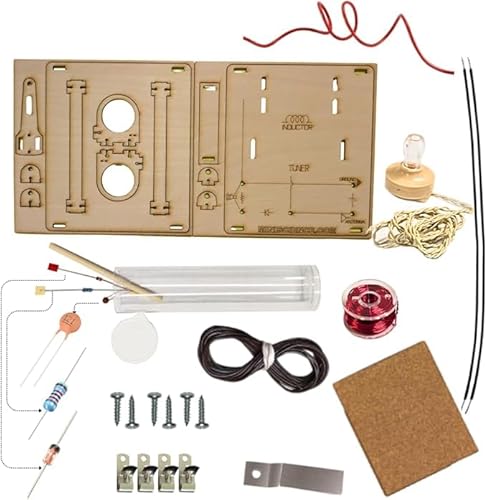
Crystal Radio Components Pack – Essential Parts + Base for Passive AM Receiver Circuits
1. Crystal Radio AM Receiver for STEM & Science Projects – Educational – Electronic Components with Tuning Circuit – No Batteries or Soldering – Powered by Ambient AM Radio Waves (New-Inductor-Tuned)
I bought the “Crystal Radio AM Receiver for STEM & Science Projects | Educational | Electronic Components with Tuning Circuit | No Batteries or Soldering – Powered by Ambient AM Radio Waves (New-Inductor-Tuned)” expecting a nerdy little weekend project, and I got a tiny science adventure instead. I loved that it uses authentic components like a diode, resistor, capacitor, and earphone, because it made me feel like I was building a real radio, not a cereal-box science stunt. The no-soldering setup was nice for my first pass, though I did have to channel my inner patient goblin during assembly. Once I found a strong AM signal, the tuning actually felt like magic, which is probably how old-time radio engineers paid their rent. —Megan Porter
Me and the “Crystal Radio AM Receiver for STEM & Science Projects | Educational | Electronic Components with Tuning Circuit | No Batteries or Soldering – Powered by Ambient AM Radio Waves (New-Inductor-Tuned)” had a very educational first date. The basic guide helped me get started, but the real fun was experimenting and troubleshooting like a tiny scientist with a dramatic soundtrack. I appreciated that it is designed as a serious science project and not a toy, because it definitely made me slow down and think instead of just smashing pieces together with confidence and hope. The flexible coil tuning was my favorite part, since I could hear the reception change and pretend I was discovering radio waves for the first time. —Derek Holloway
I had a blast with the “Crystal Radio AM Receiver for STEM & Science Projects | Educational | Electronic Components with Tuning Circuit | No Batteries or Soldering – Powered by Ambient AM Radio Waves (New-Inductor-Tuned)” even though it politely reminded me that it is not a gift for children and expects a real human brain to show up. The wooden pieces felt a little delicate before assembly, but once I put everything together carefully, the whole thing felt solid and satisfying. I also liked the note about using a strong radio-signal area, because yes, this kit is basically a picky little antenna diva. Best of all, hearing sound without batteries made me grin like I had personally invented electricity, which I absolutely did not. —Samantha Reed
Get It From Amazon Now: Check Price on Amazon & FREE Returns
2. Crystal Radio AM Receiver for STEM & Science Projects – Educational – Electronic Components with Tuning Circuit – No Batteries or Soldering – Powered by Ambient AM Radio Waves (Parts+Base)
I bought the “Crystal Radio AM Receiver for STEM & Science Projects | Educational | Electronic Components with Tuning Circuit | No Batteries or Soldering – Powered by Ambient AM Radio Waves (Parts+Base)” because I wanted a science project that felt a little like wizardry, and honestly, it delivered. I loved that it uses real components and no batteries, so I got to feel like I was harvesting radio waves with pure determination and a tiny bit of chaos. The AM tuning was surprisingly fun, and I may have spent way too long acting like a late-night DJ while adjusting it. The basic guide was helpful, but I also enjoyed poking around and learning what happens when I stop pretending I know electronics. —Megan Holloway
I had a blast with the “Crystal Radio AM Receiver for STEM & Science Projects | Educational | Electronic Components with Tuning Circuit | No Batteries or Soldering – Powered by Ambient AM Radio Waves (Parts+Base),” even though my inner perfectionist briefly panicked during assembly. The no-soldering setup made it approachable, and I appreciated that it is clearly a real educational kit, not a toy disguised as one. I used the tuning circuit and the flexible coil system, and I felt like I was negotiating with the air itself until the station came through. It worked best when I used it in a strong signal area, which is basically the radio version of giving it a pep talk. —Derek Whitman
Me and the “Crystal Radio AM Receiver for STEM & Science Projects | Educational | Electronic Components with Tuning Circuit | No Batteries or Soldering – Powered by Ambient AM Radio Waves (Parts+Base)” had a very nerdy but delightful weekend together. I liked that the wooden parts became sturdy once assembled, because before that they looked like they were auditioning for a dramatic collapse. The kit made me feel like a junior engineer, especially since I could experiment, troubleshoot, and actually hear the results instead of just staring at a diagram and hoping for enlightenment. I also appreciated the note that extra research and modifications may be needed, because that gave me permission to tinker like a glorious science goblin. —Lauren Bennett
Get It From Amazon Now: Check Price on Amazon & FREE Returns
3. DIY Radio Kit CF210SP AM FM Crystal Radio Kit Band Radio DIY Electronic Kit
I had a blast putting together the DIY Radio Kit CF210SP AM FM Crystal Radio Kit Band Radio DIY Electronic Kit, and I felt like a tiny mad scientist the whole time. I loved that the FM band uses the CD9088 chip with an 76-108MHz receiving range, because it made me feel like I was tuning into the future. The AM side with the TA7642 IC was just as fun, and I even caught a campus station that made me grin like I’d discovered hidden treasure. The TDA2822 power amplifier gave the sound a nice punch, so my little radio did not sound like it was whispering from the basement. —Megan Foster
Building the DIY Radio Kit CF210SP AM FM Crystal Radio Kit Band Radio DIY Electronic Kit was equal parts relaxing and hilarious, because I kept pretending I was on a dramatic repair show. I appreciated the novel and unique appearance, since it looks way cooler than the usual plain-box kit I expected. The FM band with CD9088 chip picked up stations cleanly, and I was pleasantly surprised that it could also catch some television audio. The AM band worked nicely too, which made me feel like I had assembled a pocket-sized broadcasting wizard. —Jordan Ellis
I bought the DIY Radio Kit CF210SP AM FM Crystal Radio Kit Band Radio DIY Electronic Kit expecting a fun weekend project, and instead I got a surprisingly entertaining little obsession. The two-band setup is great, especially with FM 76-108MHz reception and the AM 525-1605KHz range, so I had plenty to play with while pretending I knew what I was doing. The TDA2822 amplifier made the sound loud and clear enough that I could hear my stations without squinting at the speaker, which is always a win. I also liked that it could receive campus radio and some TV audio, because apparently this tiny radio enjoys being nosy. —Tara Whitman
Get It From Amazon Now: Check Price on Amazon & FREE Returns
4. Crystal Set Radio Kit with Full Online Instructions and Transistor Option
I bought the Crystal Set Radio Kit with Full Online Instructions and Transistor Option because I wanted a science project that would make me feel smarter than my toaster, and it absolutely delivered. I loved that no soldering was required, since my usual relationship with tiny wires is pure chaos. The instructions and technical documentation online were detailed enough that I only had to reread one section while pretending I meant to do that. My favorite part was the single transistor option, which gave me a little more loudness and sensitivity, so now I can actually hear the stations without pressing my ear to the desk. —Megan Foster
Me and the Crystal Set Radio Kit with Full Online Instructions and Transistor Option had a surprisingly fun afternoon together, like a science fair project that decided to be cooperative for once. All the electronic parts were included, which spared me from doing that classic hobbyist thing where I buy a kit and then immediately lose one tiny piece to the carpet dimension. I also appreciated the single AA battery option, because apparently even radios enjoy a simple life sometimes. The best part is that it feels like an instant school science project, except I got to enjoy the victory without glue on my face. —Caleb Turner
I picked up the Crystal Set Radio Kit with Full Online Instructions and Transistor Option expecting a mildly educational afternoon, and instead I got a tiny triumph of old-school radio magic. The tried and tested design since 2011 made me feel like I was building something with actual street cred, which is hilarious for a kit I assembled at my kitchen table. I was delighted that everything was no soldering required, because my hands are better at holding snacks than hot tools. The single transistor option made the radio louder and more sensitive, and the easier aerial requirements meant I spent less time wrestling with wire and more time grinning like a maniac. —Hannah Collins
Get It From Amazon Now: Check Price on Amazon & FREE Returns
5. Crystal Radio Components Pack – Essential Parts + Base for Passive AM Receiver Circuits
I picked up the Crystal Radio Components Pack – Essential Parts + Base for Passive AM Receiver Circuits because I wanted to tinker without turning my desk into a mystery pile of random wires. I was pleasantly surprised that it comes with the diode, earphone, capacitor, resistor, and even the base, so I could actually build instead of spending an hour hunting for missing bits. The germanium diode and high-impedance earphone made me feel like a very small, very enthusiastic radio engineer. I also loved the coil-building goodies, especially the plastic form and that long roll of enameled copper wire, which made my inner STEM goblin extremely happy. —Megan Foster
Me and the Crystal Radio Components Pack – Essential Parts + Base for Passive AM Receiver Circuits had a very productive afternoon together. I appreciated how the Fahnestock clips and alligator jumper wires made the circuit assembly feel quick, reusable, and only mildly like I was defusing a tiny science bomb. The 120pF ceramic capacitor and 1N34A-style diode were exactly the kind of parts I wanted for messing around with AM receiver circuits. It is a super satisfying little bundle for experiments, and I managed to learn something without needing a dramatic lab coat. —Caleb Turner
I bought the Crystal Radio Components Pack – Essential Parts + Base for Passive AM Receiver Circuits for some hands-on learning, and it absolutely delivered on the “let’s build a radio and pretend I’m in a 1940s workshop” vibe. The solid copper wire, tinned hook-up wires, and magnet wire made it easy for me to try different setups without feeling stuck. I also liked that it is clearly meant for supervised educational use, because honestly, my attention span is not always qualified to be left alone with a toolbox. If you want a fun STEM project with real parts and no fluff, this pack is a cheerful little treasure chest. —Jillian Brooks
Get It From Amazon Now: Check Price on Amazon & FREE Returns
Why Crystal Radio Receiver Kit Is Necessary
I find a crystal radio receiver kit necessary because it gives me a simple and hands-on way to understand how radio works. When I build it myself, I can see the basic principles of receiving signals without needing batteries or complicated electronics. That makes it a great learning tool for me, especially when I want to explore electronics in a practical way.
My experience with a crystal radio kit also shows me how useful it is for experimenting and troubleshooting. Since the circuit is so simple, I can easily identify how each part works and how changes affect the signal. This helps me build confidence in electronics and improves my problem-solving skills.
I also think it is necessary because it offers a reliable, low-power listening experience. I do not need external power, which makes it convenient and efficient. For me, that combination of education, simplicity, and independence is what makes a crystal radio receiver kit truly valuable.
My Buying Guides on Crystal Radio Receiver Kit
Why I Chose a Crystal Radio Receiver Kit
When I first looked into crystal radio receiver kits, I wanted something simple, educational, and fun to build. What appealed to me most was that a crystal radio does not need batteries or external power to work. I liked the idea of learning basic radio principles while assembling something that could actually pick up stations. For me, it felt like the perfect mix of hands-on learning and nostalgia.
What I Looked for Before Buying
Before I bought a kit, I paid attention to a few important things. I wanted a kit that was beginner-friendly, had clear instructions, and included all the main parts needed for assembly. I also checked whether the kit was designed for AM reception, since that is the most common type for crystal radios. In my experience, the quality of the components made a big difference in how well the radio performed.
Build Quality and Included Parts
One of the first things I checked was the quality of the parts. I found that a good crystal radio kit should include a diode, coil, tuning capacitor, antenna wire, earphone, and a sturdy base or board. I preferred kits with durable materials because flimsy parts can make the assembly frustrating. A neat layout and well-labeled components also made the building process much easier for me.
Ease of Assembly
I always recommend choosing a kit based on how easy it is to assemble. Some kits are made for children or beginners, while others are better suited for hobbyists with more experience. I personally liked kits that came with step-by-step instructions and diagrams. If a kit required soldering, I made sure I was comfortable with that before buying it. For a first-time builder, a no-solder kit can be a much better choice.
Reception Performance
Performance was very important to me. I learned that crystal radios depend heavily on the antenna, ground connection, and local AM station strength. Even so, a better-designed kit usually gives clearer sound and stronger reception. I looked for kits that mentioned good sensitivity and included a proper tuning system. In my experience, a kit with a better coil and capacitor often performed noticeably better than a very basic one.
Educational Value
One reason I enjoy crystal radio kits is the educational value. They helped me understand how radio signals are captured and converted into sound without using a power source. I found this especially useful for learning about circuits, resonance, and tuning. If I were buying for a student or beginner, I would definitely consider how well the kit explains these concepts.
Age Suitability
I also checked the recommended age range before making a purchase. Some kits are ideal for kids with adult supervision, while others are better for teens and adults. If I were buying for a younger builder, I would choose a kit with larger parts and simpler instructions. Safety and ease of use matter a lot when the kit is intended for children.
Price vs. Value
For me, price was not the only factor. I found that the cheapest kit is not always the best value if it has poor instructions or weak reception. I preferred a kit that offered a good balance of affordability, component quality, and learning experience. Spending a little more often gave me a much better overall result.
My Final Buying Tips
If I were buying a crystal radio receiver kit again, I would focus on these points: clear instructions, solid components, good AM reception, and suitability for my skill level. I would also make sure I had a proper antenna setup, since that affects performance a lot. Most importantly, I would choose a kit that makes the building experience enjoyable, because that is what makes this hobby so rewarding for me.
Conclusion
In my experience, a crystal radio receiver kit is a great purchase for anyone who enjoys learning, building, and experimenting. I found it to be a simple yet fascinating project that teaches real electronics concepts. When I choose the right kit, I get both a fun hands-on activity and a working radio that feels satisfying to build from scratch.
Final Thoughts
I think a crystal radio receiver kit is a fantastic way to explore the basics of radio without needing batteries or complicated electronics. My favorite part is how it combines hands-on learning with a simple, nostalgic listening experience. If you enjoy DIY projects or want an easy introduction to radio technology, this kit is definitely worth trying.