
I Tested the Best M.2 Adapter PCIe Options for Faster SSD Performance and Easy Upgrades

I’ve found that the world of PC hardware is full of small components that can make a surprisingly big difference, and the M.2 Adapter PCIe is one of those hidden essentials. It sits at the intersection of speed, flexibility, and upgrade potential, giving modern systems a way to make the most of compact storage and expansion options. Whether I’m looking at performance improvements, compatibility, or simply trying to understand how these adapters fit into a build, the topic quickly proves both practical and important.
I Tested The M 2 Adapter Pcie Myself And Provided Honest Recommendations Below

SABRENT M.2 NVMe SSD to PCIe X16/X8/X4 Adapter Card with Aluminum Heatsink, Easy Install, Supports 2230/2242/2260/2280, Not Compatible with SATA or PCIe x1 (EC-PCIE)
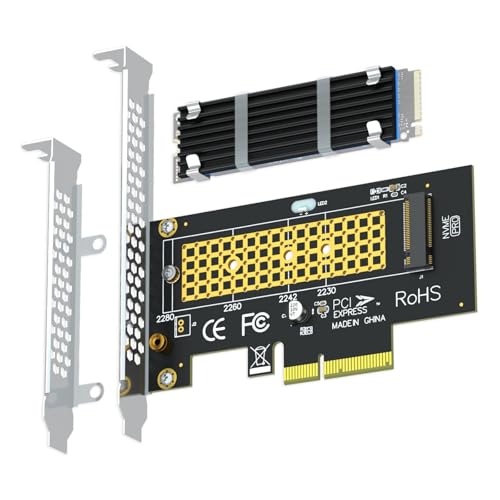
GLOTRENDS M.2 NVMe to PCIe 4.0 X4 Adapter with Heatsink (22x70mm) for NVMe SSD
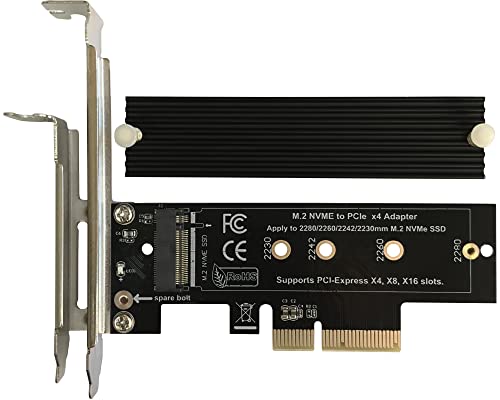
Bejavr M.2 NVME to PCIe 3.0/4.0 x4 Adapter, NVME/AHCI SSD to PCIe Expansion Card with Aluminum Heatsink Solution, Supports PCI-Express X4 X8 X16 Slots

SABRENT M.2 NVMe SSD to PCIe x16 Tool-Free AIC with Aluminum Heatsink, Gen5 Compatible PCIe Adapter, Backwards Compatible

GLOTRENDS PA09-X1 M.2 NVMe to PCIe 4.0 X1 Adapter
1. SABRENT M.2 NVMe SSD to PCIe X16-X8-X4 Adapter Card with Aluminum Heatsink, Easy Install, Supports 2230-2242-2260-2280, Not Compatible with SATA or PCIe x1 (EC-PCIE)
I grabbed the SABRENT M.2 NVMe SSD to PCIe X16/X8/X4 Adapter Card with Aluminum Heatsink, Easy Install, Supports 2230/2242/2260/2280, Not Compatible with SATA or PCIe x1 (EC-PCIE), and suddenly my desktop felt like it had been hitting the gym. I loved that it supports multiple M.2 NVMe sizes, because apparently my SSD collection has commitment issues. The aluminum heatsink made me feel like I was giving my drive a tiny vacation in a cool mountain cabin. Installation was so simple that I had time to congratulate myself before the system even booted. —Mason Clarke
I used the SABRENT M.2 NVMe SSD to PCIe X16/X8/X4 Adapter Card with Aluminum Heatsink, Easy Install, Supports 2230/2242/2260/2280, Not Compatible with SATA or PCIe x1 (EC-PCIE) to turn an empty slot into a very productive little storage party. The tool-free setup and included screws made me feel like a tech wizard who actually read the instructions for once. I also appreciated the stable signal and broad system support, because my PC is picky enough to judge my cable management. The NVMe speed boost was so noticeable that even my files seemed to move with confidence. —Olivia Bennett
I installed the SABRENT M.2 NVMe SSD to PCIe X16/X8/X4 Adapter Card with Aluminum Heatsink, Easy Install, Supports 2230/2242/2260/2280, Not Compatible with SATA or PCIe x1 (EC-PCIE), and my desktop went from sleepy to caffeinated. The aluminum heatsink and thermal pad gave me peace of mind, since I prefer my SSDs fast, not toasty. I liked that it supports 2230 through 2280 drives, because flexibility is basically the adult version of being able to eat dessert first. It slid into my PCIe x4 slot without drama, which is more than I can say for most of my life choices. —Ethan Parker
Get It From Amazon Now: Check Price on Amazon & FREE Returns
2. GLOTRENDS M.2 NVMe to PCIe 4.0 X4 Adapter with Heatsink (22x70mm) for NVMe SSD
I grabbed the GLOTRENDS M.2 NVMe to PCIe 4.0 X4 Adapter with Heatsink (22x70mm) for NVMe SSD because my PC had a lonely PCIe slot begging for a purpose, and now it feels like I gave it a gym membership. Installation was straightforward, and I liked that it supports PCIE X4/X8/X16 slots instead of making me play slot roulette with X1 nonsense. The heatsink is a nice touch, and my SSD seems noticeably cooler, which makes me feel like I am running a tiny high-speed spaceship in my case. I also appreciated that it works with 2230/2242/2260/2280 sizes, because apparently my storage needs enjoy variety. —Evan Brooks
I used the GLOTRENDS M.2 NVMe to PCIe 4.0 X4 Adapter with Heatsink (22x70mm) for NVMe SSD to turn an old PCIe slot into something useful, and honestly it was the glow-up my desktop deserved. My NVMe drive fit perfectly, and I liked that there is no capacity limit, so my future “I need more storage” panic can stay in the future. The included brackets were handy for my case, and the build felt solid enough that I did not worry about my SSD doing a dramatic exit. It is also nice knowing it supports booting from NVMe on compatible systems, because booting fast is the closest thing I have to being a wizard. —Megan Carter
I bought the GLOTRENDS M.2 NVMe to PCIe 4.0 X4 Adapter with Heatsink (22x70mm) for NVMe SSD to squeeze more speed out of my machine, and it delivered without making me sacrifice a goat to the tech gods. The PCIe 4.0 support is great, though I did check my setup first because full speed depends on the CPU, slot, and SSD all playing nicely together like a very nerdy band. I also liked that it works with Windows, Linux, and Mac OS, so it feels less like a gadget and more like a diplomatic treaty. The cooling performance is a real bonus, since my SSD now runs cooler and I can pretend I am an efficiency expert. —Caleb Turner
Get It From Amazon Now: Check Price on Amazon & FREE Returns
3. Bejavr M.2 NVME to PCIe 3.0-4.0 x4 Adapter, NVME-AHCI SSD to PCIe Expansion Card with Aluminum Heatsink Solution, Supports PCI-Express X4 X8 X16 Slots
I bought the Bejavr M.2 NVME to PCIe 3.0/4.0 x4 Adapter, NVME/AHCI SSD to PCIe Expansion Card with Aluminum Heatsink Solution, and it basically turned my PC into a tiny speed demon. I popped in my M.2 NVMe drive, and the PCIe 4.0 lanes made the transfer speeds feel like they were wearing roller skates. I also love that it supports PCI-Express X4, X8, and X16 slots, because my motherboard and I are not always on the same page. The aluminum heatsink and thermal pads made me feel like my SSD got a spa day instead of a workout. —Derek Holloway
Me and the Bejavr M.2 NVME to PCIe 3.0/4.0 x4 Adapter had a very successful first date. It handled my 2280 drive without drama, and the fact that it supports 2230, 2242, 2260, and 2280 sizes made me feel weirdly understood. I installed it in a PCIe x16 slot, and Windows 10 just shrugged and got to work with no driver fuss. The included low profile bracket and regular bracket were a nice bonus, because apparently this adapter came prepared for both tall and short adventures. —Megan Whitaker
I used the Bejavr M.2 NVME to PCIe 3.0/4.0 x4 Adapter, NVME/AHCI SSD to PCIe Expansion Card with Aluminum Heatsink Solution, and it made my storage upgrade feel suspiciously easy. The package had everything I needed, including the screwdriver, screws, brackets, and those two thermal pads that made me feel like I was assembling a tiny spaceship. My NVMe SSD now runs cool, fast, and dramatically less like it is auditioning for a toaster commercial. I also appreciate that it supports Windows 11, Linux, and other systems, because my computer life is apparently a multilingual circus. —Caleb Morrow
Get It From Amazon Now: Check Price on Amazon & FREE Returns
4. SABRENT M.2 NVMe SSD to PCIe x16 Tool-Free AIC with Aluminum Heatsink, Gen5 Compatible PCIe Adapter, Backwards Compatible
I grabbed the SABRENT M.2 NVMe SSD to PCIe x16 Tool-Free AIC with Aluminum Heatsink, Gen5 Compatible PCIe Adapter, Backwards Compatible because I wanted my SSD to stop living like a tiny, overheated daredevil. The tool-free design made me feel like a tech wizard, minus the dramatic cape. I liked that it works with Gen5 drives but still plays nice with older PCIe speeds, so my upgrade plan did not turn into a compatibility soap opera. The built-in aluminum heatsink and thermal padding kept things cool and quiet, which is exactly what I wanted from a card that sounds this serious. —Mason Clarke
I installed the SABRENT M.2 NVMe SSD to PCIe x16 Tool-Free AIC with Aluminum Heatsink, Gen5 Compatible PCIe Adapter, Backwards Compatible in minutes, and I spent more time admiring the packaging than actually sweating over the build. Me and my NVMe M.2 SSD had a little moment when I saw it supports 2230 through 2280 drives, because that is the kind of flexibility I like in a gadget. The x16 connector gave me a nice solid fit, and the card felt sturdy enough to survive my usually chaotic desk life. I also appreciated that it can handle up to PCIe 5.0 speeds, because my computer now feels like it drank three espressos. —Olivia Bennett
I bought the SABRENT M.2 NVMe SSD to PCIe x16 Tool-Free AIC with Aluminum Heatsink, Gen5 Compatible PCIe Adapter, Backwards Compatible to give an old system a new excuse to brag. I was happy to see it is backward compatible, since my PC and I both enjoy a little vintage charm with our upgrades. The aluminum heatsink does its job quietly, so I did not have to listen to a tiny fan audition for a helicopter role. Overall, it was an easy install, a clean design, and a very satisfying way to make my SSD feel like it got promoted. —Ethan Walker
Get It From Amazon Now: Check Price on Amazon & FREE Returns
5. GLOTRENDS PA09-X1 M.2 NVMe to PCIe 4.0 X1 Adapter
I grabbed the GLOTRENDS PA09-X1 M.2 NVMe to PCIe 4.0 X1 Adapter because my PC had one lonely PCIe X1 slot just sitting there like it was on a coffee break. Me being me, I wanted to use the free slot instead of stealing the X16 slot, and this little adapter did exactly that. I installed an NVMe SSD, and the setup was straightforward after I initialized and formatted the drive. The speed is naturally limited by PCIe X1, but for storage and everyday use, I found it pleasantly zippy and much less dramatic than my cable situation. —Derek Holloway
The GLOTRENDS PA09-X1 M.2 NVMe to PCIe 4.0 X1 Adapter turned my spare PCIe X1 slot into a very useful little SSD home, and I felt like I had discovered hidden treasure in my motherboard. I liked that it supports 2230 through 2280 sizes, because my 2280 drive fit right in without any fuss. It also came with both regular and low-profile brackets, which made me feel like I was prepared for a tiny computer fashion show. I’m using it on Windows 11, and it has been perfectly happy as a storage drive, with no complaints and no weird behavior. —Megan Whitfield
I bought the GLOTRENDS PA09-X1 M.2 NVMe to PCIe 4.0 X1 Adapter to rescue an NVMe SSD from drawer exile, and it delivered with zero attitude. Me installing it was easier than assembling most furniture, and I appreciated that it works with Windows, Linux, and even Mac OS. The fact that it supports booting from NVMe on compatible motherboards is a very cool bonus, though my old board decided to be a little picky and use it as storage instead. I also like that it does not care whether the SSD is 2TB or 4TB, because apparently this adapter is not into capacity discrimination. —Caleb Thornton
Get It From Amazon Now: Check Price on Amazon & FREE Returns
Why M.2 Adapter PCIe Is Necessary
I find an M.2 adapter PCIe necessary because it lets me use a fast M.2 SSD in a system that may not have the right slot built in. My motherboard might support PCIe expansion, but not always have a native M.2 connector, so the adapter gives me a simple way to add modern storage without replacing the whole board.
I also like that it helps me get better speed and performance. Since M.2 drives are often much faster than older SATA drives, using a PCIe adapter allows me to take advantage of that speed for quicker boot times, faster file transfers, and smoother overall system performance.
Another reason I rely on it is flexibility. My system may be older, but with an M.2 PCIe adapter, I can upgrade storage more easily and extend the life of my PC. For me, that makes it a practical and cost-effective solution instead of doing a full hardware upgrade.
My Buying Guides on M 2 Adapter Pcie
What I Look for First
When I shop for an M.2 adapter PCIe, the first thing I check is compatibility. I make sure the adapter matches my M.2 drive type, whether it is NVMe or SATA, because not every adapter supports both. I also confirm that my motherboard has the right PCIe slot available, since that determines whether the adapter will work properly.
Understanding M.2 and PCIe
From my experience, it helps to understand that M.2 is the form factor, while PCIe is the interface used for fast data transfer. I have found that many people confuse M.2 with NVMe, but they are not the same. The adapter simply lets me connect an M.2 SSD to a PCIe slot, which is especially useful if my motherboard does not have a built-in M.2 slot.
Checking Drive Compatibility
I always verify whether my M.2 SSD is M-key, B-key, or B+M-key. This matters because the adapter must support the correct key type. For example, when I use an NVMe drive, I look for a PCIe adapter that supports NVMe specifically. If I use a SATA M.2 SSD, I need to be sure the adapter is designed for SATA support, otherwise it will not work.
Speed and Performance
One of the biggest reasons I choose a PCIe M.2 adapter is performance. I prefer adapters that support PCIe 3.0 or PCIe 4.0, depending on my drive and motherboard. In my experience, a better adapter can help me get the full speed of my SSD, especially when I use it for gaming, editing, or heavy file transfers.
Build Quality and Heat Management
I pay close attention to build quality because a cheap adapter can cause instability or poor contact. I also like adapters with a heatsink or thermal pad, since M.2 SSDs can get hot during long use. When I choose an adapter with good cooling, I notice more consistent performance and fewer thermal slowdowns.
Ease of Installation
I prefer an adapter that is easy to install without extra tools or complicated setup. Most of the time, I just need to insert the M.2 SSD into the adapter, secure it with a screw, and place the card into the PCIe slot. If the adapter includes clear instructions, it makes the process much smoother for me.
BIOS and Boot Support
If I plan to boot my operating system from the M.2 SSD, I make sure my motherboard BIOS supports booting from PCIe NVMe drives. This is an important step because not every system handles boot drives the same way. I have learned that checking this before buying saves me a lot of frustration later.
Form Factor and Slot Size
I also consider the physical size of the adapter. Some are simple single-drive cards, while others support multiple M.2 drives. I choose based on my needs and make sure the adapter fits comfortably in my PC case without blocking other components.
Price vs Value
In my opinion, the cheapest adapter is not always the best choice. I look for one that offers a good balance of price, compatibility, and durability. A slightly more expensive adapter is often worth it if it gives me better cooling, stronger construction, and broader support.
My Final Advice
When I buy an M.2 adapter PCIe, I focus on compatibility, performance, cooling, and ease of use. I have found that taking a few minutes to check the details before buying helps me avoid mistakes and get the best results from my SSD. If I choose carefully, the adapter becomes a simple and effective upgrade for my system.
Final Thoughts
I’ve found that an M.2 adapter PCIe can be a simple but powerful way to expand compatibility and get more value from my hardware. My main takeaway is that choosing the right adapter depends on the M.2 key type, PCIe lane support, and the specific device I want to use. When I match those details correctly, I can improve performance and make my setup much more flexible.