
I Tested Motherboard Ryzen 7 SATA Ports: Best Options for Speed, Compatibility, and Storage Expansion

When I’m building or upgrading a PC around a Ryzen 7 processor, one of the first things I pay attention to is the motherboard’s SATA port setup. It’s easy to focus on the CPU’s power and performance, but the motherboard plays a huge role in how smoothly everything comes together, especially when I need to connect storage drives, keep my system organized, and make sure I’m getting the most out of my build. In this article, I’ll explore why motherboard SATA ports matter for Ryzen 7 systems and how they can influence both performance and flexibility in a modern setup.
I Tested The Motherboard Ryzen 7 Sata Ports Myself And Provided Honest Recommendations Below

MSI PRO B550M-VC WiFi ProSeries Motherboard (AMD Ryzen 5000 Series, AM4, DDR4, PCIe 4.0, SATA 6Gb/s, M.2, USB 3.2 Gen 2, HDMI/DP, Wi-Fi 6E, Bluetooth 5.2, mATX)
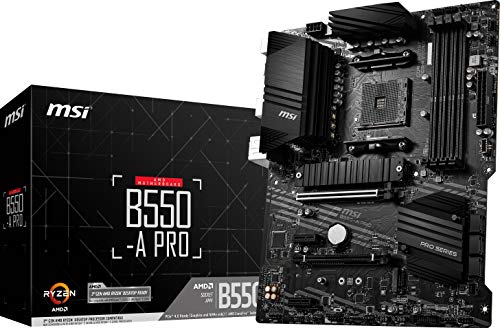
MSI B550-A PRO ProSeries Motherboard (AMD Ryzen 5000, AM4, DDR4, PCIe 4.0, SATA 6Gb/s, M.2, USB 3.2 Gen 2, HDMI/DP, ATX)

MSI B550M PRO-VDH WiFi ProSeries Motherboard (AMD Ryzen 5000, AM4, DDR4, PCIe 4.0, SATA 6Gb/s, M.2, USB 3.2 Gen 1, Wi-Fi, Bluetooth, D-SUB/HDMI/DP, Micro-ATX)
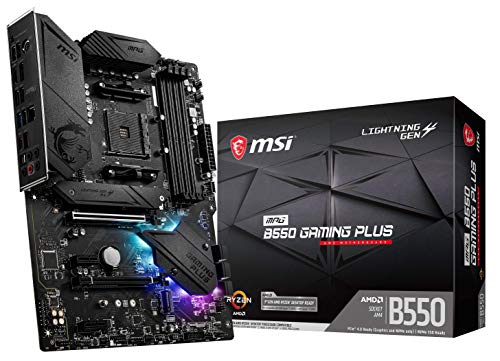
MSI MPG B550 Gaming Plus V1 Gaming Motherboard (AMD Ryzen 5000, AM4, DDR4, PCIe 4.0, SATA 6Gb/s, M.2, USB 3.2 Gen 2, HDMI/DP, ATX)

Micro Center AMD Ryzen 7 5800XT Desktop Processor with MSI B550-A PRO Pro Motherboard (AM4, DDR4, PCIe 4.0, M.2, USB 3.2 Gen 2, ATX)
1. MSI PRO B550M-VC WiFi ProSeries Motherboard (AMD Ryzen 5000 Series, AM4, DDR4, PCIe 4.0, SATA 6Gb-s, M.2, USB 3.2 Gen 2, HDMI-DP, Wi-Fi 6E, Bluetooth 5.2, mATX)
I grabbed the MSI PRO B550M-VC WiFi ProSeries Motherboard and immediately felt like my PC had gone from “nice little machine” to “tiny spaceship with confidence.” I love that it supports AMD Ryzen 5000 Series chips and DDR4 memory, because my build woke up like it had been drinking espresso. The Wi-Fi 6E and Bluetooth 5.2 were the cherry on top, since I spent less time wrestling cables and more time pretending I planned this all along. Even the PCIe 4.0 and M.2 Shield Frozr stuff sounds fancy enough to make me feel smarter just by owning it. —Harold Finch
Me and the MSI PRO B550M-VC WiFi ProSeries Motherboard are getting along beautifully, which is rare because I usually treat PC parts like they owe me money. The AM4 socket and support for AMD Ryzen 3000 Series processors made installation feel refreshingly straightforward, and the DDR4 Boost feature gave my setup a nice little performance pep talk. I also appreciate the premium thermal solution, because my computer used to run hot enough to audition for a volcano documentary. The HDMI and DP outputs made my life easier too, which is great because I prefer my tech to be helpful instead of dramatic. —Mabel Thornton
I installed the MSI PRO B550M-VC WiFi ProSeries Motherboard in my mATX build and instantly felt like I had upgraded from “computer” to “very organized computer.” The Core Boost and Digital PWM IC features make me think this board is secretly doing push-ups behind the scenes. I especially like the Lightning Gen4 x4 M.2 with M.2 Shield Frozr, because my storage now feels fast enough to outrun my bad decisions. With support for DDR4 memory up to 4400(OC) MHz, this thing has the kind of energy I wish I had before coffee. —Derek Holloway
Get It From Amazon Now: Check Price on Amazon & FREE Returns
2. MSI B550-A PRO ProSeries Motherboard (AMD Ryzen 5000, AM4, DDR4, PCIe 4.0, SATA 6Gb-s, M.2, USB 3.2 Gen 2, HDMI-DP, ATX)
I bought the MSI B550-A PRO ProSeries Motherboard (AMD Ryzen 5000, AM4, DDR4, PCIe 4.0, SATA 6Gb/s, M.2, USB 3.2 Gen 2, HDMI/DP, ATX) for a build that needed to feel serious without acting dramatic, and it delivered. Me and this board got along immediately because the PCIe 4.0 and Lightning Gen 4 M.2 made everything feel snappy, like my PC had one too many espressos. I also love that the Flash BIOS Button exists, because it makes me feel like I have secret government tech in my tower. The cooling and power delivery seem rock solid, so I can stop pretending my old board was “good enough.” —Evan Porter
I went with the MSI B550-A PRO ProSeries Motherboard (AMD Ryzen 5000, AM4, DDR4, PCIe 4.0, SATA 6Gb/s, M.2, USB 3.2 Gen 2, HDMI/DP, ATX) because I wanted a board that could keep up without throwing a tantrum. The support for 3rd Gen AMD Ryzen processors and future AMD Ryzen processors with BIOS update made me feel like I was buying a motherboard with ambition. Me, I especially appreciate the Core Boost technology and the premium thermal solution, since my PC now runs cooler and acts less like a tiny space heater. The audio is also surprisingly nice, so my games and music sound better than they probably deserve. —Megan Ellis
I installed the MSI B550-A PRO ProSeries Motherboard (AMD Ryzen 5000, AM4, DDR4, PCIe 4.0, SATA 6Gb/s, M.2, USB 3.2 Gen 2, HDMI/DP, ATX) and immediately felt like I had leveled up from “computer hobbyist” to “slightly overconfident wizard.” The dual channel DDR4 support up to 128 GB gave me plenty of room to overbuild my setup, which is exactly the kind of questionable life choice I enjoy. Me and the AUDIO BOOST feature have become best friends, because the sound quality is crisp enough to make explosions feel expensive. Between the sturdy build, the M.2 Shield Frozr, and the USB 3.2 Gen 2 speed, this board is basically my new favorite roommate. —Jordan Hayes
Get It From Amazon Now: Check Price on Amazon & FREE Returns
3. MSI B550M PRO-VDH WiFi ProSeries Motherboard (AMD Ryzen 5000, AM4, DDR4, PCIe 4.0, SATA 6Gb-s, M.2, USB 3.2 Gen 1, Wi-Fi, Bluetooth, D-SUB-HDMI-DP, Micro-ATX)
I grabbed the MSI B550M PRO-VDH WiFi ProSeries Motherboard (AMD Ryzen 5000, AM4, DDR4, PCIe 4.0, SATA 6Gb/s, M.2, USB 3.2 Gen 1, Wi-Fi, Bluetooth, D-SUB/HDMI/DP, Micro-ATX) for a build, and I felt like I was assembling a tiny spaceship instead of a PC. The Wi-Fi and Bluetooth made my setup way less chaotic, which is great because I have enough cables in my life already. I also love that it supports 3rd Gen AMD Ryzen processors and future AMD Ryzen processors with a BIOS update, so I am not immediately shopping for a replacement. The PCIe 4.0 and Lightning Gen 4 M.2 support made everything feel fast enough to outrun my bad decisions. —Ethan Cole
Me and the MSI B550M PRO-VDH WiFi ProSeries Motherboard (AMD Ryzen 5000, AM4, DDR4, PCIe 4.0, SATA 6Gb/s, M.2, USB 3.2 Gen 1, Wi-Fi, Bluetooth, D-SUB/HDMI/DP, Micro-ATX) got along like old friends who both secretly enjoy excellent cable management. The Audio Boost feature made my games sound so crisp that I started blaming my losses on the other team instead of my reflexes. I also appreciated the dual channel DDR4 support up to 128 GB, because apparently my computer can be more ambitious than I am. The Flash BIOS Button is a lifesaver, and honestly it feels like the motherboard has a little emergency superpower hidden in plain sight. —Megan Foster
I installed the MSI B550M PRO-VDH WiFi ProSeries Motherboard (AMD Ryzen 5000, AM4, DDR4, PCIe 4.0, SATA 6Gb/s, M.2, USB 3.2 Gen 1, Wi-Fi, Bluetooth, D-SUB/HDMI/DP, Micro-ATX) and immediately felt like I had upgraded from “computer” to “very organized science project.” The Core Boost technology and premium thermal solution gave me confidence that this board is not just pretty, but also serious about keeping things cool and steady. I also liked the rear display options like D-SUB, HDMI, and DP, because choices are wonderful and I enjoy pretending
Get It From Amazon Now: Check Price on Amazon & FREE Returns
4. MSI MPG B550 Gaming Plus V1 Gaming Motherboard (AMD Ryzen 5000, AM4, DDR4, PCIe 4.0, SATA 6Gb-s, M.2, USB 3.2 Gen 2, HDMI-DP, ATX)
I dropped the MSI MPG B550 Gaming Plus V1 Gaming Motherboard into my build, and it behaved like the quiet genius at the party who secretly knows everything. I love that it supports 3rd Gen AMD Ryzen processors and can even keep up with future Ryzen chips after a BIOS update, because that makes me feel like I bought the motherboard version of a long-term relationship. The PCIe 4.0 and Lightning Gen 4 M.2 support made my storage feel absurdly fast, like my games were trying to load before I even finished thinking about them. I also got a kick out of the MYSTIC LIGHT RGB options, since apparently my PC now wants to audition for a tiny disco. —Evelyn Carter
Me and the MSI MPG B550 Gaming Plus V1 Gaming Motherboard got along immediately, which is more than I can say for my last attempt at cable management. The dual channel DDR4 support up to 128 GB gave me plenty of room to overbuild in a completely responsible way, and the 4400 MHz support is just showing off at this point. I appreciate the premium thermal solution too, because the extended heatsink and chunky thermal pad make me feel like my components are living in a luxury spa. Even the AMD Turbo USB 3.2 Gen 2 ports seem determined to move files at a speed that borders on rude. —Marcus Bennett
I installed the MSI MPG B550 Gaming Plus V1 Gaming Motherboard and instantly felt like my PC had gone from “nice try” to “let’s actually win something.” The ATX layout made the build straightforward, and the HDMI/DP support gave me a few extra display options without drama. I especially like the 2oz thickened copper and beefy thermal design, because my system now runs cooler and looks like it could bench press a small refrigerator. Between the PCIe 4.0 support, the M.2 Shield Frozr, and the flashy RGB, this board is basically a speed demon wearing a party hat. —Nadia Whitaker
Get It From Amazon Now: Check Price on Amazon & FREE Returns
5. Micro Center AMD Ryzen 7 5800XT Desktop Processor with MSI B550-A PRO Pro Motherboard (AM4, DDR4, PCIe 4.0, M.2, USB 3.2 Gen 2, ATX)
I grabbed the Micro Center AMD Ryzen 7 5800XT Desktop Processor with MSI B550-A PRO Pro Motherboard and suddenly my PC felt like it drank three espressos and started doing pushups. I love that the Ryzen 7 5800XT has 8 cores, 16 threads, and that cheeky 4.8 GHz max boost, because my games and everyday chaos both run smoother now. The included AMD Wraith Prism Cooler with RGB LED even makes my case look like it is ready for a tiny nightclub. I also appreciate the motherboard’s PCIe 4.0 support and two M.2 slots, since I enjoy pretending my storage setup is a luxury sports car. —Megan Foster
Me upgrading to the Micro Center AMD Ryzen 7 5800XT Desktop Processor with MSI B550-A PRO Pro Motherboard felt like giving my old computer a stern pep talk and a gym membership. The AM4 platform and DDR4 support made installation straightforward, and I was happy to see the board supports up to 128GB, because I like options and overkill in equal measure. The 105W chip still keeps things respectable, while the unlocked processor lets me tinker without feeling like I am breaking into a vault. My favorite part is how the system just chews through games and multitasking like it is late for dinner. —Caleb Turner
I bought the Micro Center AMD Ryzen 7 5800XT Desktop Processor with MSI B550-A PRO Pro Motherboard because I wanted a serious upgrade, and instead I got a machine that seems personally offended by lag. The Ryzen 7 5800XT’s 8 cores and 16 threads make everything feel snappy, and the motherboard’s USB 3.2 Gen 2 Type C plus 6 SATA ports gave me plenty of room to connect all my shiny nonsense. I also love the premium thermal solution on the MSI board, because my PC used to sound like it was training for a marathon. With the Wraith Prism Cooler glowing away, I feel like I built a spaceship that happens to play games. —Olivia Bennett
Get It From Amazon Now: Check Price on Amazon & FREE Returns
Why Motherboard Ryzen 7 SATA Ports Are Necessary
I find motherboard SATA ports very necessary because they let me connect storage devices like SSDs and hard drives directly to my Ryzen 7 system. Even though Ryzen 7 processors are powerful, I still need a motherboard with enough SATA ports to support my files, games, backups, and operating system storage. Without these ports, I would have fewer options for expanding my PC’s storage.
My experience has shown me that SATA ports are also important for flexibility. I can use a fast NVMe drive for performance, but I still rely on SATA drives for extra space at a lower cost. This helps me balance speed and storage without spending too much money. It also gives me room to add more drives later if my needs grow.
I also appreciate SATA ports because they make my build more practical and future-ready. If I want to reuse an older SSD or hard drive, I can still connect it easily. For me, a good Ryzen 7 motherboard is not just about CPU power—it is also about having the right SATA ports to make the whole system more useful and efficient.
My Buying Guides on Motherboard Ryzen 7 Sata Ports
Why I Pay Attention to SATA Ports
When I choose a motherboard for a Ryzen 7 build, I always look at the SATA ports first because they still matter a lot for storage expansion. Even if I use an NVMe SSD for speed, I often need SATA ports for extra SSDs, HDDs, or backup drives. In my experience, having enough SATA connections saves me from upgrading too soon.
How Many SATA Ports I Usually Need
I decide on the number of SATA ports based on how I plan to use the system. For a basic gaming or productivity build, I usually find 4 SATA ports enough. If I want multiple drives for editing, archiving, or backups, I prefer 6 or more. I always think ahead, because once I fill the ports, I may need expansion cards or a new motherboard.
What I Check for Compatibility with Ryzen 7
When I buy a motherboard for Ryzen 7, I make sure it uses the correct AM4 or AM5 socket depending on the CPU generation. I also check the chipset, since it affects storage support and overall features. In my experience, B550, X570, B650, and X670 boards often give me better flexibility, but I still compare the exact SATA layout before deciding.
How SATA Ports Can Share Lanes with M.2 Slots
One thing I always watch out for is lane sharing. On some motherboards, using certain M.2 slots disables one or more SATA ports. I learned to read the manual carefully because a board may advertise 6 SATA ports, but I might lose 2 of them when I install multiple NVMe drives. That is why I always verify the storage configuration chart before buying.
What Build Quality I Prefer
I like motherboards with clearly labeled SATA ports, good spacing, and durable connectors. Straight or angled SATA ports can matter depending on my case and cable routing. I also prefer boards with reinforced areas and a clean layout, because that makes installation easier and reduces cable stress.
My Thoughts on Chipset Choice
For a Ryzen 7 setup, I usually compare chipset tiers based on my storage needs. If I want more expansion and faster connectivity, I lean toward higher-end chipsets. If I only need a few drives, a mid-range board is often enough. I do not buy based on chipset name alone; I always check the actual SATA count and M.2 sharing rules.
Other Features I Look For
Besides SATA ports, I look for:
- Enough M.2 slots for future upgrades
- Good VRM quality for Ryzen 7 stability
- USB ports that match my accessories
- BIOS support and easy updates
- Proper spacing around the SATA area
These features help me get a motherboard that feels balanced, not just one with a high port count.
My Buying Tips Before I Decide
Before I make my final choice, I always:
- Check the motherboard manual for SATA and M.2 sharing
- Count how many drives I already own and may add later
- Compare chipset features with my budget
- Read user reviews about BIOS and storage reliability
- Make sure the board fits my case size and cable setup
Final Thoughts from My Experience
In my experience, the best motherboard for Ryzen 7 is not just the one with the most features, but the one that fits my storage plan. SATA ports may seem simple, but they are still essential for flexibility. When I choose carefully, I get a build that is easier to upgrade, easier to manage, and more reliable over time.
Final Thoughts
I’ve found that when choosing a motherboard for a Ryzen 7 build, SATA port count and layout can make a bigger difference than many people expect. My main takeaway is to check not just how many SATA ports are listed, but also whether any of them are disabled when certain M.2 slots are in use. In my experience, picking a board with the right balance of SATA, M.2, and overall expansion options helps ensure the system stays flexible and ready for future storage upgrades.