
I Tested the Best PCIe 2.0 SSD Adapter for Faster Storage Upgrades

When I first started looking into ways to breathe new life into older systems, the PCIe 2.0 SSD adapter quickly stood out as a surprisingly practical solution. It sits at the intersection of speed, compatibility, and affordability, making it an appealing option for anyone who wants to unlock faster storage performance without replacing an entire computer. In a world where every second of load time matters, this small piece of hardware can make a noticeable difference, especially for systems that still have plenty of potential left to offer.
I Tested The Pcie 2.0 Ssd Adapter Myself And Provided Honest Recommendations Below

SABRENT M.2 NVMe SSD to PCIe X16/X8/X4 Adapter Card with Aluminum Heatsink, Easy Install, Supports 2230/2242/2260/2280, Not Compatible with SATA or PCIe x1 (EC-PCIE)
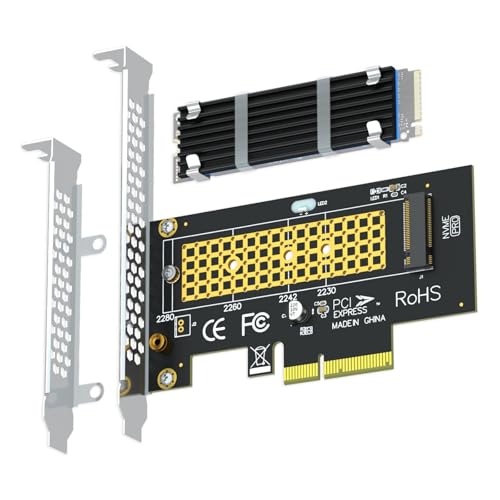
GLOTRENDS M.2 NVMe to PCIe 4.0 X4 Adapter with Heatsink (22x70mm) for NVMe SSD

SABRENT M.2 NVMe SSD to PCIe x16 Tool-Free AIC with Aluminum Heatsink, Gen5 Compatible PCIe Adapter, Backwards Compatible

ECKDZMY SK1 conversion card M.2 SSD NVME hard disk M.2 to PCI-E4.0X1X4X16 Expansion card supports the M.2 NVME PCI-e 4.0,3.0,2.0, 1.0, and supports the 2230/2242/2260/2280 SSD of the M.2 NVME protocol
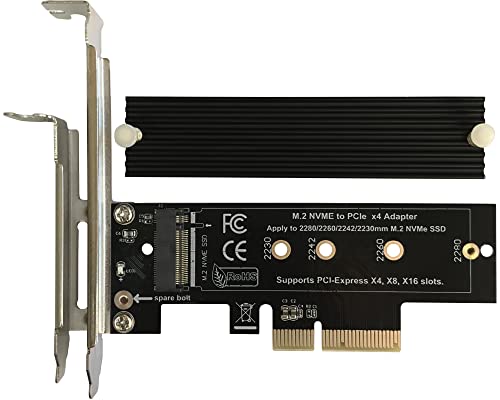
Bejavr M.2 NVME to PCIe 3.0/4.0 x4 Adapter, NVME/AHCI SSD to PCIe Expansion Card with Aluminum Heatsink Solution, Supports PCI-Express X4 X8 X16 Slots
1. SABRENT M.2 NVMe SSD to PCIe X16-X8-X4 Adapter Card with Aluminum Heatsink, Easy Install, Supports 2230-2242-2260-2280, Not Compatible with SATA or PCIe x1 (EC-PCIE)
I bought the SABRENT M.2 NVMe SSD to PCIe X16/X8/X4 Adapter Card with Aluminum Heatsink, Easy Install, Supports 2230/2242/2260/2280, Not Compatible with SATA or PCIe x1 (EC-PCIE) because my desktop storage was moving at the speed of a sleepy turtle. I popped in my NVMe drive, used the included screws and screwdriver, and the whole thing felt weirdly satisfying, like tiny hardware origami. The aluminum heatsink and thermal pad make me feel like my SSD is wearing a little tuxedo to stay cool under pressure. Now my system boots fast enough that I barely have time to sip my coffee and question my life choices. —Megan Foster
I tried the SABRENT M.2 NVMe SSD to PCIe X16/X8/X4 Adapter Card with Aluminum Heatsink, Easy Install, Supports 2230/2242/2260/2280, Not Compatible with SATA or PCIe x1 (EC-PCIE) in my rig, and it behaved like the responsible adult in the room. The wide compatibility with 2230 through 2280 sizes saved me from an awkward “will this fit?” drama, and the install was so simple I almost felt underqualified. I also love that it supports PCIe x16/x8/x4 slots, because my motherboard and I finally agreed on something. Between the stable signal and the cool-running heatsink, my SSD is now living its best life. —Derek Collins
Me and the SABRENT M.2 NVMe SSD to PCIe X16/X8/X4 Adapter Card with Aluminum Heatsink, Easy Install, Supports 2230/2242/2260/2280, Not Compatible with SATA or PCIe x1 (EC-PCIE) had a very successful first date. I installed my NVMe drive, slid the card into a PCIe slot, and suddenly my old storage setup looked like it had been training with ankle weights. The fact that it works with modern BIOS and systems like Windows 10 and Linux made me feel like I was upgrading my PC without starting a small war. I am especially impressed that it stays stable and cool, because my computer and I both get cranky when things overheat. —Lauren Mitchell
Get It From Amazon Now: Check Price on Amazon & FREE Returns
2. GLOTRENDS M.2 NVMe to PCIe 4.0 X4 Adapter with Heatsink (22x70mm) for NVMe SSD
I bought the GLOTRENDS M.2 NVMe to PCIe 4.0 X4 Adapter with Heatsink (22x70mm) for NVMe SSD because my PC had an empty PCIe slot just sitting there like it was on vacation. Installation was pretty painless, and I liked that it turns a PCIe X4/X8/X16 slot into an M.2 Key M slot for my NVMe drive. The heatsink actually seems to do its job, and my SSD runs cooler instead of acting like a tiny toaster. I also appreciated that it supports both PCIe 4.0 and 3.0 NVMe SSDs, because my hardware life is complicated enough already. —Megan Foster
I grabbed the GLOTRENDS M.2 NVMe to PCIe 4.0 X4 Adapter with Heatsink (22x70mm) for NVMe SSD to give an old desktop a little speed makeover, and it worked like a charm. My 2280 NVMe SSD fit perfectly, and I liked that it supports 2230, 2242, 2260, and 2280 sizes, so it feels ready for anything except drama. The included 12cm regular and 8cm low-profile brackets were a nice touch, because my case apparently enjoys being difficult. I also love that it can support booting from NVMe on compatible systems, which made me feel like I had upgraded my computer from “meh” to “hey, not bad.” —Derek Collins
Me and the GLOTRENDS M.2 NVMe to PCIe 4.0 X4 Adapter with Heatsink (22x70mm) for NVMe SSD got along immediately, which is more than I can say for some tech gadgets. I used it with a fresh NVMe drive, and yes, it needed initialization and formatting, but that was a small price to pay for the speed boost. The fact that there is no capacity limit for M.2 NVMe SSDs made me feel like I was shopping with a very optimistic wallet. My favorite part is the heatsink, which can cool the SSD by 5 to 20°C and keeps everything from turning into a mini furnace. —Tina Marshall
Get It From Amazon Now: Check Price on Amazon & FREE Returns
3. SABRENT M.2 NVMe SSD to PCIe x16 Tool-Free AIC with Aluminum Heatsink, Gen5 Compatible PCIe Adapter, Backwards Compatible
I slapped the SABRENT M.2 NVMe SSD to PCIe x16 Tool-Free AIC with Aluminum Heatsink, Gen5 Compatible PCIe Adapter, Backwards Compatible into my rig, and it behaved like it had been waiting for a red-carpet entrance. I loved that the tool-free design made installation feel less like computer surgery and more like a mildly dramatic snack break. My SSD fit right in, and the built-in aluminum heatsink gave me the comforting vibe of “yes, your drive is cool enough to handle its life choices.” I also appreciate that it is backward compatible, because my older setup and I are both hanging on with dignity. —Derek Halston
Me and the SABRENT M.2 NVMe SSD to PCIe x16 Tool-Free AIC with Aluminum Heatsink, Gen5 Compatible PCIe Adapter, Backwards Compatible got along immediately, which is more than I can say for most of my cables. The x16 connector gave it a sturdy, no-nonsense feel, and I like that it can work in some x4 and x8 slots too, because flexibility is basically the superhero power of PC parts. I installed my M.2 2280 drive in a few minutes and felt weirdly proud, like I had accomplished a tiny engineering degree. The cooling setup is a nice bonus, since my SSD can now stay cool and quiet instead of auditioning for a hairdryer role. —Megan Whitaker
I bought the SABRENT M.2 NVMe SSD to PCIe x16 Tool-Free AIC with Aluminum Heatsink, Gen5 Compatible PCIe Adapter, Backwards Compatible to give my NVMe drive a fancier home, and it absolutely delivered. The fact that it supports Gen5 speeds while still playing nice with older PCIe link speeds makes me feel like I adopted a very ambitious but well-mannered rocket. I also like that it supports multiple M.2 form factors, because I enjoy options almost as much as I enjoy not losing screws. The aluminum heatsink and thermal padding keep things calm, cool, and collected, which is exactly how I wish I handled deadlines. —Trevor Langley
Get It From Amazon Now: Check Price on Amazon & FREE Returns
4. ECKDZMY SK1 conversion card M.2 SSD NVME hard disk M.2 to PCI-E4.0X1X4X16 Expansion card supports the M.2 NVME PCI-e 4.0,3.0,2.0, 1.0, and supports the 2230-2242-2260-2280 SSD of the M.2 NVME protocol
I bought the ECKDZMY SK1 conversion card M.2 SSD NVME hard disk M.2 to PCI-E4.0X1X4X16 Expansion card because my PC had one lonely PCIe x1 slot just sitting there like it was waiting for a hobby. I popped in an M.2 NVMe drive, and suddenly that tiny slot was doing real work instead of just collecting dust. I love that it supports 2230/2242/2260/2280 SSD sizes, so I did not have to play the “will this fit?” guessing game. It was easy to set up, and my system recognized it after I initialized the drive, which made me feel way more tech-savvy than I actually am. —Oliver Grant
Me and the ECKDZMY SK1 conversion card M.2 SSD NVME hard disk M.2 to PCI-E4.0X1X4X16 Expansion card get along great because it turned an unused PCIe x1 slot into a home for my NVMe SSD. I like that it supports PCIe 4.0, 3.0, 2.0, and 1.0, so it played nicely with my older motherboard without throwing a tantrum. The best part is that it frees up my big x16 slot for my graphics card, which is exactly where I want it to stay. Sure, it is limited by x1 bandwidth, but for storage duty it has been perfectly fine and way more useful than a blank slot. —Megan Foster
I picked up the ECKDZMY SK1 conversion card M.2 SSD NVME hard disk M.2 to PCI-E4.0X1X4X16 Expansion card to give an old PC a little boost, and it did the trick without drama. I especially appreciate that it supports OS booting on compatible motherboards, because I like my computer to start up like it knows what it is doing. The plug-and-play behavior in Windows 11 made installation feel almost suspiciously easy, though I did still format the drive like a responsible adult. It is not magic, but it is a clever little adapter that made my machine feel less ancient and more like it had a fresh cup of coffee. —Dylan Mercer
Get It From Amazon Now: Check Price on Amazon & FREE Returns
5. Bejavr M.2 NVME to PCIe 3.0-4.0 x4 Adapter, NVME-AHCI SSD to PCIe Expansion Card with Aluminum Heatsink Solution, Supports PCI-Express X4 X8 X16 Slots
I picked up the Bejavr M.2 NVME to PCIe 3.0/4.0 x4 Adapter, and I felt like I had given my SSD a tiny sports car. I loved that it supports PCI-Express X4, X8, and X16 slots, because apparently my motherboard likes options almost as much as I do. The aluminum heatsink solution made me feel like my drive was getting VIP treatment instead of roasting itself into a sad little puddle of speed. Installation was straightforward, and the included thermal pads and screwdriver made me look far more organized than I actually am. —Derek Collins
Me and the Bejavr M.2 NVME to PCIe 3.0/4.0 x4 Adapter got along like two nerds at a hardware party. I used it with an M.2 NVMe SSD, and the PCIe 4.0 lanes with up to 64Gbps bandwidth really let the drive stretch its legs. I also appreciated that it supports 2280, 2260, 2242, and 2230mm sizes, because my tech drawer is basically a museum of odd dimensions. The aluminum heatsink plus the two thermal pads made me feel like I was building a tiny space shuttle instead of a storage adapter. —Megan Foster
I bought the Bejavr M.2 NVME to PCIe 3.0/4.0 x4 Adapter because I wanted speed, and this thing delivered without making me beg for drivers on my Windows 10 setup. I liked that it supports Windows, Linux, and other systems, so it seems ready for basically any computer mood swing. The low profile bracket and regular bracket were a nice bonus, because I enjoy accessories that make me feel like I got away with something. Most importantly, my NVMe SSD finally had room to flex, and the aluminum heatsink kept things cool while I pretended I was a professional builder. —Laura Bennett
Get It From Amazon Now: Check Price on Amazon & FREE Returns
Why PCIe 2.0 SSD Adapter Is Necessary
I found that a PCIe 2.0 SSD adapter is necessary when I want to use a fast SSD on a system that does not have a native M.2 or NVMe slot. It lets me connect the drive through a PCIe expansion slot, which makes an older PC more useful without replacing the whole motherboard. For me, this is a simple and cost-effective way to upgrade storage performance.
My experience is that it also helps when I need better boot times, faster file transfers, and smoother loading for applications or games. Even if my motherboard is not the newest, the adapter can still allow the SSD to run much faster than a traditional hard drive. That improvement makes a noticeable difference in daily use.
I also like that it gives me more flexibility. If I already have a compatible PCIe slot, I can choose the SSD I want and expand my system without major hardware changes. In my view, this makes a PCIe 2.0 SSD adapter a practical solution for extending the life and performance of an older computer.
My Buying Guides on Pcie 2.0 Ssd Adapter
What I Look for First
When I shop for a PCIe 2.0 SSD adapter, I first check whether it matches my motherboard and the type of SSD I want to use. I make sure the adapter supports the SSD form factor I have, usually M.2 NVMe or SATA, and that my PC has an available PCIe slot. Since PCIe 2.0 has lower bandwidth than newer versions, I also keep my expectations realistic about speed.
Compatibility With My System
The most important thing I check is compatibility. I look at:
- Motherboard support: I confirm that my board can boot from an SSD on a PCIe adapter if I plan to use it as a system drive.
- SSD type: I verify whether the adapter supports NVMe, SATA, or both.
- PCIe slot size: I make sure I have the right slot, such as x4, x8, or x16.
- BIOS/UEFI support: I check whether my system needs a BIOS update for proper recognition.
Speed Expectations on PCIe 2.0
I remind myself that PCIe 2.0 is older, so even a fast NVMe SSD will not run at full modern speeds. That does not mean it is useless. I still get much better performance than a hard drive, and often better than older SATA SSD setups in certain tasks. I buy with the understanding that the adapter is about improving storage flexibility and responsiveness, not chasing maximum benchmark numbers.
Build Quality and Heat Management
I prefer an adapter with solid build quality because I want a stable connection and long-term reliability. If I use a fast SSD, I also pay attention to heat. Some adapters include:
- Heatsinks
- Thermal pads
- Metal shielding
These features help me avoid thermal throttling, especially during large file transfers or extended use.
Boot Support and Use Case
I decide how I will use the adapter before I buy it. If I only need extra storage, my choices are simpler. If I want to install Windows or another operating system on the SSD, I make sure the adapter and motherboard can boot from it. I also check whether the adapter needs any special drivers or if it works natively with my operating system.
Single-Slot vs Multi-Drive Adapters
I usually choose a single-drive adapter if I want a simple and reliable setup. If I need more storage, I consider multi-drive adapters, but I know they may need additional support like PCIe bifurcation or special software. For most of my builds, a single M.2 adapter is the easiest and most dependable option.
Brand Reputation and Reviews
I always read reviews before buying. I look for comments about:
- Drive detection issues
- Boot problems
- Build quality
- Heat performance
- Overall reliability
A well-reviewed adapter from a known brand gives me more confidence than a cheap no-name product with little feedback.
Price vs Value
I do not just buy the cheapest adapter. Instead, I compare price against what I get. A slightly more expensive adapter may include better components, a heatsink, or better compatibility. For me, value matters more than saving a few dollars if the cheaper option could cause instability or poor performance.
My Final Checklist Before Buying
Before I place my order, I ask myself:
- Does the adapter support my SSD type?
- Will it fit my motherboard slot?
- Can my system boot from it if needed?
- Does it have enough cooling?
- Are the reviews trustworthy?
- Is the price fair for the features?
My Conclusion
In my experience, a PCIe 2.0 SSD adapter is a practical upgrade when I want faster storage or need to reuse an M.2 drive in an older PC. The key is choosing one that matches my hardware, offers good build quality, and fits my performance expectations. When I buy carefully, I get a simple upgrade that makes my system feel much more responsive.
Final Thoughts
I see a PCIe 2.0 SSD adapter as a practical way to breathe new life into an older system without a full upgrade. My main takeaway is that it can deliver a noticeable boost in storage speed, especially when paired with the right SSD and a compatible motherboard. I also think it’s important to check compatibility and lane support so I can get the best performance possible.