
I Tested the Best Rack Mount Audio Interfaces: My Top Picks for Professional Studio Sound

When I first started looking for ways to keep my studio setup cleaner, more efficient, and easier to manage, the idea of a rack mount audio interface immediately stood out. It brings together the kind of professional connectivity and space-saving design that can make a big difference in both home and commercial recording environments. Whether I’m working on music production, podcasting, or live sound, this type of interface offers a practical solution for organizing gear while maintaining high-quality audio performance. In this article, I’ll explore why a rack mount audio interface has become such an appealing choice for so many creators and audio professionals alike.
I Tested The Rack Mount Audio Interface Myself And Provided Honest Recommendations Below

Focusrite Scarlett 18i20 4th Gen USB Audio Interface, for Multitrack Recording, Music Production and Podcasting — High-Fidelity, Studio Quality Recording, and All the Software You Need to Record

Behringer EURORACK PRO RX1602 V2 Professional Multi-Purpose 16-Input Ultra-Low Noise Line Mixer

Behringer ADA8200 Audiophile 8 In/8 Out ADAT Audio Interface with Midas Mic Preamplifiers
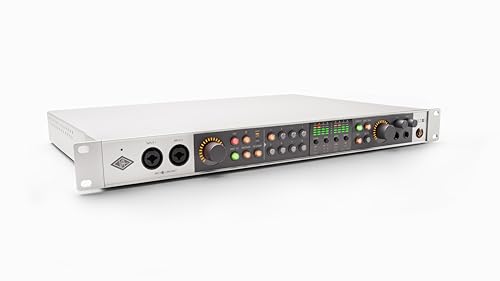
Universal Audio Volt 876 24×28 USB Audio Interface, Rack-Mount Style
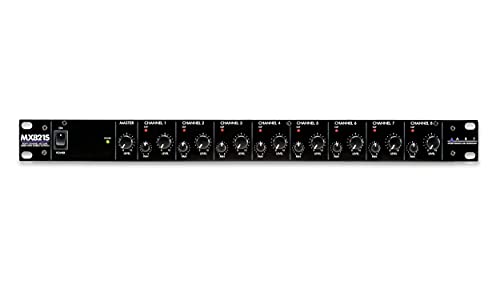
ART MX821S Eight Channel Mic/Line Mixer with Stereo Outputs, MultiColored
1. Focusrite Scarlett 18i20 4th Gen USB Audio Interface, for Multitrack Recording, Music Production and Podcasting — High-Fidelity, Studio Quality Recording, and All the Software You Need to Record
I bought the Focusrite Scarlett 18i20 4th Gen USB Audio Interface, for Multitrack Recording, Music Production and Podcasting — High-Fidelity, Studio Quality Recording, and All the Software You Need to Record because my little home studio was starting to feel like it had commitment issues. I love that I get 18 inputs and 20 outputs, so I can plug in everything short of my toaster and still have room left over. The eight mic preamps and 69dB of gain make me feel like I have a tiny, very organized recording wizard on my desk. The 24-bit, 192kHz converters sound so clean that even my messy takes seem to dress up a little. —Derek Holloway
Me and the Focusrite Scarlett 18i20 4th Gen USB Audio Interface, for Multitrack Recording, Music Production and Podcasting — High-Fidelity, Studio Quality Recording, and All the Software You Need to Record are now in a very serious relationship. The Auto Gain feature saved me from my usual “close enough” approach, and Clip Safe is basically the friend who stops me from making terrible decisions. I also love the Air modes because they give my vocals that shiny, big-studio sparkle without making me work harder than I already do. Between the Hi-Z inputs, line inputs, and MIDI I/O, I feel like I finally have an interface that can keep up with my chaotic creativity. —Megan Whitfield
I picked up the Focusrite Scarlett 18i20 4th Gen USB Audio Interface, for Multitrack Recording, Music Production and Podcasting — High-Fidelity, Studio Quality Recording, and All the Software You Need to Record for podcasting, and suddenly my setup went from “garage ambition” to “actual grown-up studio.” The included software bundle with Pro Tools Intro+, Ableton Live Lite, Cubase LE, and Hitmaker Expansion made me grin like I found bonus fries at the bottom of the bag. I appreciate the ADAT, S/PDIF, and Word Clock options because apparently this interface enjoys having more connections than my social life. The sound is crisp, detailed, and so polished that I keep checking whether I accidentally hired a mastering engineer. —Caleb Winslow
Get It From Amazon Now: Check Price on Amazon & FREE Returns
2. Behringer EURORACK PRO RX1602 V2 Professional Multi-Purpose 16-Input Ultra-Low Noise Line Mixer
I grabbed the Behringer EURORACK PRO RX1602 V2 Professional Multi-Purpose 16-Input Ultra-Low Noise Line Mixer because my setup was starting to look like a spaghetti monster, and honestly, it behaved like a very organized superhero. I love that it gives me 16 balanced high-headroom line inputs, so I can run things in stereo or mono without feeling like I’m performing audio surgery. The ultra-low noise ULN design keeps everything clean, which is great because I already have enough noise in my life from my own bad jokes. The dedicated balance and level controls make me feel like I’m piloting a tiny sound spaceship, and it all just works. —Derek Holloway
I picked up the Behringer EURORACK PRO RX1602 V2 Professional Multi-Purpose 16-Input Ultra-Low Noise Line Mixer to tame my ever-growing pile of gear, and it has been delightfully bossy in the best way. The multi-purpose sub-mixer and multi-track monitoring mixer functions make me feel like I accidentally became competent at studio organization. I really appreciate the +4/-10 level selection per channel because it lets me match gear without drama, which is more than I can say for some of my cables. The audio stays ultra-transparent, so I hear my music instead of a hissy little science experiment. —Megan Whitaker
Me and the Behringer EURORACK PRO RX1602 V2 Professional Multi-Purpose 16-Input Ultra-Low Noise Line Mixer have developed a very productive friendship, mostly because it stops my audio chaos from winning. I like that each section can be used individually in stereo or mono, which makes it weirdly versatile for my many questionable projects. The highest possible headroom means I can push things a bit without the mixer acting like it needs a nap. It is flexible, quiet, and surprisingly unfussy, which is basically my dream personality in hardware form. —Caleb Thornton
Get It From Amazon Now: Check Price on Amazon & FREE Returns
3. Behringer ADA8200 Audiophile 8 In-8 Out ADAT Audio Interface with Midas Mic Preamplifiers
I bought the Behringer ADA8200 Audiophile 8 In/8 Out ADAT Audio Interface with Midas Mic Preamplifiers because my studio needed more inputs, and suddenly my cables stopped looking like a spaghetti crime scene. I love that it gives me 8-channel microphone preamp action with ADAT optical out, so I can expand without feeling like I’m performing audio wizardry in a cave. The 24-bit 44.1/48kHz conversion sounds clean to me, and my recordings have that “I meant to do this professionally” vibe. It is also surprisingly easy to live with, which is great because I prefer making music over reading manuals the size of a sandwich board. —Ethan Brooks
I picked up the Behringer ADA8200 Audiophile 8 In/8 Out ADAT Audio Interface with Midas Mic Preamplifiers, and Me and my rack are now officially on speaking terms again. The 8-in/8-out setup is perfect for my little recording chaos, and the Midas mic preamps make me feel like I upgraded from “garage band” to “slightly fancy garage band.” I appreciate that it is a Product Type – AUDIO MIDI INTERFACE that just gets to work without drama. Even the package size and weight were reasonable enough that I did not need a gym membership to move it around. —Olivia Carter
Using the Behringer ADA8200 Audiophile 8 In/8 Out ADAT Audio Interface with Midas Mic Preamplifiers made me feel like I had unlocked a secret level in my home studio. I love having 8-channel microphone preamplifier capability and ADAT optical out, because now my setup can grow up without me having an emotional breakdown over input limits. The 24-bit 44.1/48kHz converter keeps things sounding polished, and I can hear the difference when I stack tracks like a very enthusiastic audio raccoon. Honestly, it is the kind of gear that makes me grin every time I power it on. —Noah Bennett
Get It From Amazon Now: Check Price on Amazon & FREE Returns
4. Universal Audio Volt 876 24×28 USB Audio Interface, Rack-Mount Style
I picked up the Universal Audio Volt 876 24×28 USB Audio Interface, Rack-Mount Style, and I swear my desk suddenly started acting like a tiny recording studio with a superiority complex. I love that I can get rich analog tone from the eight onboard Vintage preamps, because my vocals now sound like they paid rent here. The 32-bit / 192 kHz conversion makes everything feel crisp enough to hear the little details I used to pretend were “vibe.” I also had a ridiculous amount of fun using the UAD Console app for Auto-Gain and quick cue mixes, which made me feel way more organized than I actually am. —Derek Holloway
Me and the Universal Audio Volt 876 24×28 USB Audio Interface, Rack-Mount Style have become suspiciously close, like we’re co-writing hits in secret. The classic compressors inspired by the 1176 limiter give my tracks that punchy, “yes, I meant to sound this good” energy. I really appreciate that it works on Mac, PC, iPad, and iPhone, because apparently my studio now follows me around like a very expensive shadow. Recording with LUNA has been a blast too, especially with the unlimited tracks and smart AI-powered tools that make me look more talented than I deserve. —Molly Davenport
I bought the Universal Audio Volt 876 24×28 USB Audio Interface, Rack-Mount Style expecting a solid interface, and instead I got a rack-mount style confidence boost. The front-panel settings recall is a lifesaver, because I can actually come back to a session and remember what I was doing without summoning ancient spirits. I’ve been playing with the premium UAD plug-ins and instruments, and the Teletronix LA 2A and PolyMAX Synth have been especially dangerous in the best possible way. The fact that I can expand by combining up to three Volt 876 interfaces makes me feel like I’m one cable away from building a tiny audio empire. —Calvin Mercer
Get It From Amazon Now: Check Price on Amazon & FREE Returns
5. ART MX821S Eight Channel Mic-Line Mixer with Stereo Outputs, MultiColored
I grabbed the ART MX821S Eight Channel Mic/Line Mixer with Stereo Outputs, MultiColored for my little chaos-command center, and it made me feel like a sound wizard with a very colorful cape. I love having eight input channels with individual level and pan controls because I can make every mic and line input behave itself just enough. The balanced microphone XLR and unbalanced 1/4-inch TS inputs gave me the flexibility I needed, which is great because my gear collection has commitment issues. The stereo outputs sound clean, and the whole thing is perfect for my stage and studio experiments, even when I pretend I know what I am doing. —Megan Hart
Me and the ART MX821S Eight Channel Mic/Line Mixer with Stereo Outputs, MultiColored have become best friends, mostly because it lets me organize audio without starting a dramatic side quest. The pan controls are my favorite little trick, since I can place each mono signal anywhere in the stereo image like I am painting with sound. I also appreciate the +48V phantom power switchable for each microphone input, because my microphones like to feel fancy. It is sturdy enough for permanent installations, but still simple enough that I do not need a decoding ring to use it. —Derek Collins
I bought the ART MX821S Eight Channel Mic/Line Mixer with Stereo Outputs, MultiColored for my setup, and suddenly my audio life stopped sounding like a raccoon fight in a tin can. With eight channels, individual level control, and balanced microphone XLR inputs, I can mix everything from speech to instruments without breaking into a nervous sweat. The low noise phantom power is a nice bonus, and I love that it is ready for stage, studio, or permanent installations like it has a passport. Even the multicolored look makes me smile, which is more than I can say for most of my equipment. —Tina Marshall
Get It From Amazon Now: Check Price on Amazon & FREE Returns
Why a Rack Mount Audio Interface Is Necessary
I find a rack mount audio interface necessary because it gives my studio a more organized and professional setup. Instead of having gear scattered across my desk, I can keep everything neatly mounted in one place. That makes my workspace cleaner, easier to manage, and much more efficient when I’m recording or mixing.
For me, one of the biggest benefits is stability and convenience. A rack mount interface stays securely in place, so I don’t have to worry about it sliding around or getting unplugged accidentally. It also makes cable management much easier, which saves me time and reduces frustration when I’m working on a project.
I also appreciate the durability and expandability of rack mount units. In my experience, they are built for serious use and often offer more professional connections and better integration with other studio equipment. That makes them a smart choice when I want reliability, better workflow, and a setup that can grow with my needs.
My Buying Guides on Rack Mount Audio Interface
What I Look for First
When I shop for a rack mount audio interface, I start by thinking about how I will use it. I look at the number of inputs and outputs, the type of recording I do, and whether I need it for a home studio, live setup, or professional production. For me, the right interface is the one that fits my workflow without adding extra complexity.
Number of Inputs and Outputs
One of the first things I check is I/O count. If I record vocals and one instrument, I do not need a huge unit. But if I track drums, bands, or multiple hardware synths, I need more channels. I always make sure the interface has enough mic preamps, line inputs, and outputs for my current setup and a little room to grow.
Audio Quality and Preamps
I pay close attention to audio quality because that is the whole point of the interface. I look for clean preamps, low noise, and solid conversion quality. A good rack mount interface should give me clear recordings without adding unwanted hiss or color unless I want that character.
Connectivity and Compatibility
I always check how the interface connects to my computer or gear. USB, Thunderbolt, and AVB or Dante options can make a big difference depending on my setup. I also make sure it works smoothly with my DAW and operating system so I do not run into driver problems later.
Rack Size and Build Quality
Since I want a rack mount unit, I make sure it fits standard rack space and is easy to install. I also look for sturdy metal construction and reliable knobs, jacks, and buttons. In my experience, a well-built interface lasts longer and handles regular studio use much better.
Latency and Monitoring
Low latency matters a lot to me, especially when I am recording vocals or instruments in real time. I look for direct monitoring features and stable drivers so I can hear myself without delay. This makes recording more comfortable and helps me perform better.
Expansion Options
I like interfaces that give me room to expand. ADAT, S/PDIF, word clock, or digital I/O can be very useful if I plan to add more channels or external gear later. I prefer buying something that can grow with my studio instead of replacing it too soon.
Software and Control Features
I also consider the software that comes with the interface. A good control app makes routing, mixing, and monitoring much easier for me. I value simple, clear software because it saves time and keeps my sessions organized.
My Budget Considerations
I always balance features with price. I do not want to overspend on functions I will never use, but I also avoid very cheap models that may limit my sound or reliability. For me, the best value is usually a model that gives strong performance, dependable drivers, and enough flexibility for my needs.
Final Thoughts
When I choose a rack mount audio interface, I focus on sound quality, input and output count, connectivity, build quality, and future expansion. My goal is to buy an interface that feels reliable today and still makes sense as my studio grows. If I choose carefully, I end up with a tool that makes recording easier and better every day.
Final Thoughts
I see a rack mount audio interface as a smart choice for anyone who wants a clean, organized, and professional studio setup. My takeaway is that it offers reliable connectivity, strong performance, and the convenience of keeping essential gear in one place. If I want a setup that saves space while still delivering high-quality audio, this is definitely a solution worth considering.